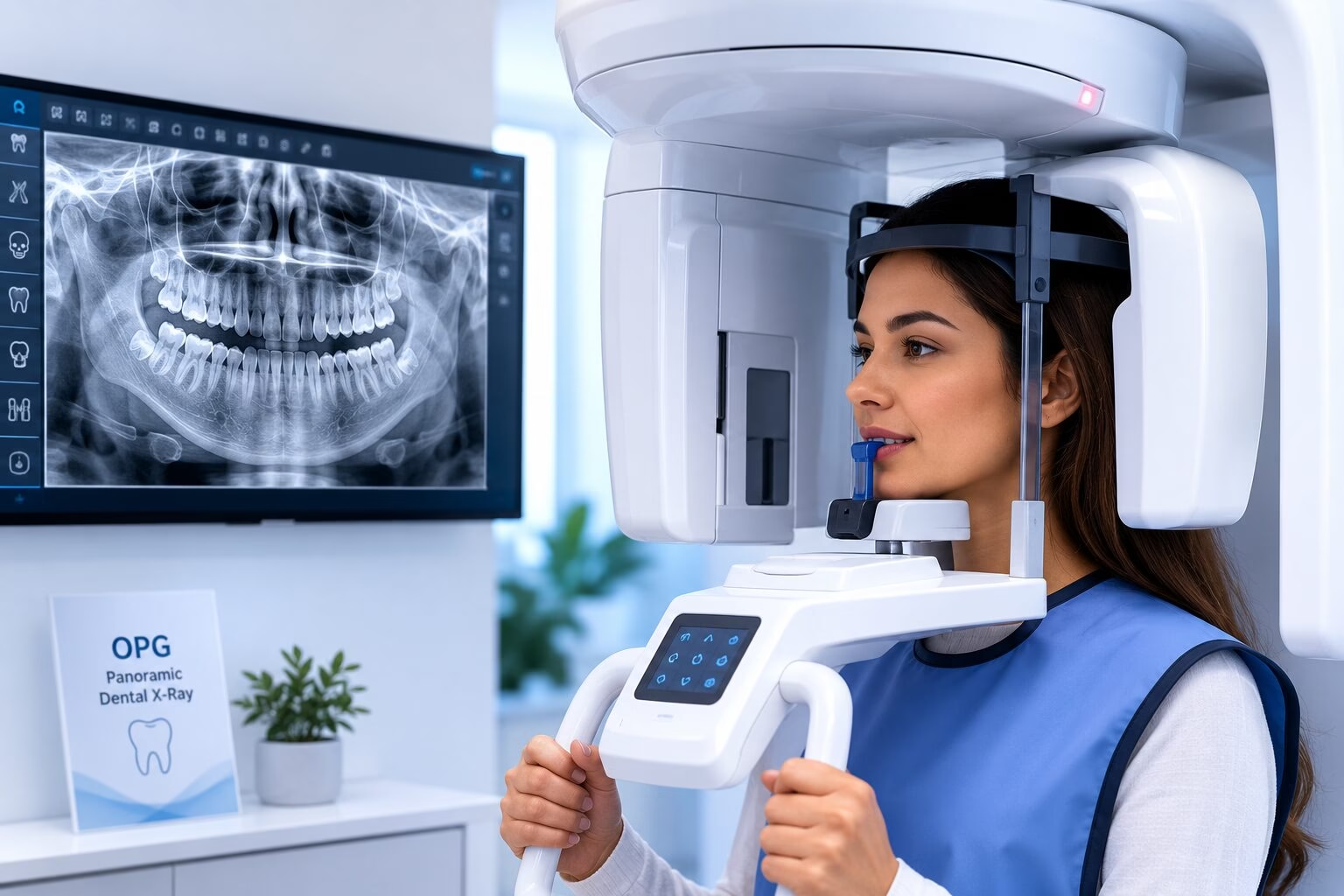
A clear picture of your teeth and jaw can make a big difference when planning dental treatment. While small dental X-rays are useful for examining individual teeth, sometimes your dentist needs a broader view of the entire mouth and jaw. This is where an OPG scan, also known as a panoramic dental X-ray, can be useful.
An OPG creates a single panoramic image of the upper and lower teeth, jawbones, and surrounding structures. It is commonly used when assessing wisdom teeth, planning orthodontic treatment, evaluating dental implants, or investigating certain jaw and dental problems.
At Health 24/7, we provide digital OPG (Panoramic Dental X-Ray) services to support accurate dental assessment and treatment planning. In this guide, we’ll explain what an OPG scan is, why it may be recommended, how the procedure works, its approximate cost in Dubai, preparation requirements, safety considerations, and how to understand the results.
What Is an OPG Scan?
OPG stands for Orthopantomogram. It is a type of panoramic dental X-ray that produces a broad, two-dimensional image of the mouth and jaw in a single examination.
Unlike an intraoral dental X-ray, which focuses on a small area, an OPG provides a wider view that can include:
- Upper and lower teeth
- Tooth roots
- Upper and lower jawbones
- Wisdom teeth
- Temporomandibular joint areas
- Parts of the nasal region and maxillary sinuses
The panoramic image allows dentists to assess the overall arrangement of the teeth and jaw and identify areas that may require closer examination.
An OPG does use X-rays, so it should be performed when the information is clinically useful for diagnosis or treatment planning. Dental radiography guidelines recommend that the type and frequency of X-rays be selected according to the patient’s clinical situation rather than using the same imaging schedule for everyone.
How Does an OPG Scan Work?
An OPG machine is designed to rotate around the patient’s head while capturing multiple X-ray images. A computer then combines the information into one panoramic image.
During the examination:
- You stand or sit in front of the OPG machine.
- The radiographer positions your head carefully.
- You may be asked to bite gently on a positioning device.
- Your head is kept still while the machine rotates around it.
- The digital detector captures the required images.
- The images are processed and reviewed.
The actual image capture usually takes only a few seconds. The complete appointment is generally short, making OPG one of the more convenient forms of dental imaging.
Remaining still and following the radiographer’s instructions are important because movement can affect image quality.
What Does an OPG Scan Show?
An OPG provides a broad overview of the teeth and jaw, making it useful for identifying several dental and maxillofacial findings.
Teeth and Tooth Roots
An OPG can show the general position of the teeth and their roots. It may help identify missing, impacted, displaced, or developing teeth and can contribute to treatment planning.
However, because an OPG provides a panoramic overview rather than close-up images, your dentist may recommend additional intraoral X-rays when a more detailed view of a particular tooth is needed.
When teeth are damaged, discoloured, or cosmetically imperfect, dental veneers can be one option for improving their appearance. Learn more about the different types, costs, and suitable options in Dental Veneers: Types, Cost & Best Options.
Jawbones
The scan provides an overview of the upper and lower jawbones and can help identify certain bone abnormalities, areas of bone loss, fractures, or other findings that require further evaluation.
Wisdom Teeth
Wisdom teeth are one of the common reasons an OPG may be requested.
The panoramic image can help the dentist assess:
- Whether wisdom teeth are present
- Their general position
- Whether they appear impacted
- Their relationship with neighbouring teeth
- Their stage of development
This information can help the dentist determine whether monitoring, further imaging, or extraction planning may be appropriate.
Temporomandibular Joint Areas
An OPG may provide a broad view of the areas around the temporomandibular joints (TMJs). However, if a patient has significant jaw-joint symptoms, additional imaging may be recommended depending on the suspected condition.
Maxillary Sinuses
Parts of the maxillary sinuses may appear on a panoramic dental X-ray. This can provide useful information in selected dental assessments, particularly when upper teeth and the surrounding structures are being evaluated.
An OPG is not a substitute for dedicated sinus imaging when a detailed evaluation of the sinuses is required.
Why Is an OPG Scan Recommended?
An OPG can be recommended for several dental and orthodontic reasons. The decision depends on your symptoms, dental examination, medical history, and treatment plan.
Common situations include:
- Assessment of wisdom teeth
- Dental implant planning
- Orthodontic assessment
- Evaluation of impacted teeth
- Jaw and facial trauma
- Assessment of certain dental infections
- Evaluation of jaw abnormalities
- Pre-treatment dental assessment
- Monitoring selected dental conditions
Dental radiographs can provide information that cannot be obtained through a physical examination alone. However, dentists are advised to request X-rays when the expected diagnostic information is likely to affect patient care.
OPG Scan for Dental Implants
Before placing a dental implant, your dentist needs to understand the condition and anatomy of the area where the implant may be placed.
An OPG can provide an initial panoramic overview of:
- Missing teeth
- Adjacent teeth
- General jawbone structure
- Approximate anatomical relationships
- Areas requiring further investigation
However, an OPG produces a two-dimensional image. If detailed three-dimensional information is needed for implant planning, your dentist may recommend CBCT imaging.
OPG Scan for Wisdom Teeth
Wisdom teeth can sometimes become impacted because there is insufficient space for them to erupt normally.
An OPG can give the dentist a broad view of all four wisdom teeth and their position within the jaw.
It can help assess:
- Whether the wisdom teeth have developed
- Their angle and position
- Their relationship with nearby teeth
- Whether they appear impacted
- Whether further imaging may be necessary
If a wisdom tooth is positioned close to important anatomical structures, your dentist may recommend more detailed imaging before extraction.
OPG Scan for Orthodontic Treatment
Orthodontists may use panoramic imaging as part of treatment planning, particularly when assessing tooth development and the position of unerupted or impacted teeth.
An OPG can provide an overview of:
- Developing permanent teeth
- Missing teeth
- Impacted teeth
- Tooth position
- Root development
- General jaw structure
The exact imaging required depends on the patient’s age, dental development, symptoms, and orthodontic treatment plan.
OPG Scan Procedure: What to Expect
An OPG examination is quick and does not require needles or injections.
Step 1: Registration
After arriving at the diagnostic centre, you’ll complete the necessary registration and provide your dental referral or relevant medical information if required.
Step 2: Remove Metal Objects
You may be asked to remove objects that could interfere with the image, including:
- Earrings
- Necklaces
- Glasses
- Hair accessories
- Facial jewellery
You may also be asked to remove removable dental appliances depending on the examination.
Step 3: Positioning
The radiographer will position you carefully in front of the panoramic X-ray machine.
You may need to:
- Stand or sit upright
- Place your chin on a support
- Bite gently on a positioning guide
- Keep your tongue positioned as instructed
- Remain completely still
Correct positioning is important for obtaining a diagnostically useful panoramic image.
Step 4: Image Capture
The machine rotates around your head while the image is captured.
The actual exposure is very brief, usually lasting only seconds.
You won’t feel the X-rays passing through your body, and the procedure itself is painless.
Step 5: Image Review
Once the scan is complete, the digital image is processed and reviewed by the appropriate dental or radiology professional.
If additional imaging is necessary, your dentist can recommend the most appropriate next step.
How to Prepare for an OPG Scan
A routine OPG usually requires very little preparation.
Before your appointment:
- You generally do not need to fast.
- Remove earrings, necklaces, and other facial jewellery.
- Remove glasses if instructed.
- Remove removable dental appliances if requested.
- Wear comfortable clothing.
- Inform the radiographer if you are pregnant or think you may be pregnant.
Pregnancy should always be disclosed before an X-ray examination so the healthcare professional can consider whether the imaging is necessary and appropriate.
Dental X-rays should be prescribed based on the patient’s individual clinical needs, with appropriate measures taken to minimize radiation exposure.
Is an OPG Scan Safe?
An OPG uses a relatively low dose of X-ray radiation. Like other X-ray examinations, it should be performed when the expected diagnostic benefit justifies the exposure.
Modern digital dental imaging can help optimize radiation exposure while producing useful diagnostic images. The FDA and ADA recommend using dental radiographs when clinically indicated and following radiation-protection principles to keep exposure as low as reasonably achievable.
An OPG is painless and does not leave any radiation inside your body after the examination.
If you are pregnant or may be pregnant, tell your dentist or radiographer before the scan.
OPG vs. CBCT: What’s the Difference?
Although both are dental imaging techniques, OPG and CBCT provide different types of information.
Feature | OPG | CBCT |
Image Type | 2D panoramic image | 3D image |
Coverage | Broad view of teeth and jaws | Detailed 3D view of a selected region |
Main Use | General dental overview | Complex dental diagnosis and treatment planning |
Radiation | Generally lower | Generally higher than panoramic imaging |
Implant Planning | Initial assessment | Detailed 3D planning |
Scan Time | Usually seconds | Usually seconds to minutes |
An OPG is often useful when a broad overview is needed. CBCT may be selected when the dentist requires detailed three-dimensional information that cannot be obtained adequately from a panoramic image.
Dental CBCT should also be used only when clinically necessary and when the additional information is expected to contribute to diagnosis or treatment.
OPG vs. Traditional Dental X-Ray
A panoramic OPG and an intraoral dental X-ray are not interchangeable.
A traditional intraoral X-ray generally focuses on a smaller area and can provide highly detailed images of individual teeth or specific regions.
An OPG, on the other hand, captures a much wider area in one image.
Feature | OPG | Intraoral Dental X-Ray |
Coverage | Wide | Small, targeted area |
Image | Panoramic 2D | Detailed 2D |
Best For | Overall dental and jaw assessment | Individual teeth and specific areas |
Wisdom Teeth | Yes | Limited depending on positioning |
Root Detail | Moderate | Generally more detailed |
Patient Position | Usually standing or sitting | Usually inside the mouth |
Your dentist may use one type of X-ray or a combination of imaging methods depending on the clinical question.
OPG Scan Cost in Dubai
The cost of an OPG scan in Dubai can vary depending on the diagnostic centre, reporting requirements, and whether the scan is performed as part of a wider dental assessment.
As a general market estimate, an OPG scan may cost around AED 100–300.
The final price can depend on:
- Diagnostic centre
- Digital imaging technology
- Radiologist or dental reporting
- Doctor consultation
- Additional dental imaging
- Insurance coverage
If you are booking an OPG at Health 24/7, contact the centre directly to confirm the current price and whether your insurance covers the examination.
Understanding Your OPG Results
After the image is captured, it is reviewed by an appropriately qualified professional. Your dentist can then interpret the findings alongside your symptoms, clinical examination, and treatment needs.
Normal OPG Results
A normal or unremarkable OPG may show appropriately positioned teeth and no obvious abnormality in the structures visible on the panoramic image.
However, a normal OPG does not necessarily mean that every tooth or dental structure is completely free from disease. Some conditions require more detailed imaging or a clinical examination.
Abnormal OPG Findings
Depending on the reason for the examination, an OPG may show findings such as:
- Impacted teeth
- Missing teeth
- Tooth development abnormalities
- Bone loss
- Certain jaw lesions
- Fractures
- Tooth or root abnormalities
- Wisdom tooth impaction
- Other structural changes
Your dentist may recommend additional imaging if the panoramic image does not provide enough detail to confirm a diagnosis.
How Long Does an OPG Scan Take?
An OPG is one of the quicker dental imaging examinations.
The actual image acquisition usually takes only a few seconds, while the complete appointment may take several minutes depending on registration, positioning, and image review.
If additional images are required because of movement or positioning issues, the radiographer may repeat the scan.
Where Can You Get an OPG Scan in Dubai?
When choosing a diagnostic imaging centre for an OPG, consider the quality of the imaging equipment, staff experience, reporting process, and convenience of appointments.
A suitable facility should offer:
- Digital panoramic dental imaging
- Trained radiography professionals
- Appropriate image quality
- Professional reporting
- Comfortable patient care
- Access to additional diagnostic imaging when required
At Health 24/7, our OPG (Panoramic Dental X-Ray) service provides a broad digital view of the teeth and jaws to support dental assessment and treatment planning. Our diagnostic imaging team focuses on accurate imaging and a comfortable patient experience.
Book Your OPG Scan at Health 24/7 Today
Whether you’re preparing for wisdom tooth removal, orthodontic treatment, dental implant assessment, or another dental procedure, an OPG can provide your dentist with a useful panoramic view of your teeth and jaw.
If your dentist has recommended a panoramic dental X-ray, book your OPG scan at Health 24/7 today and take the next step toward informed dental care with reliable diagnostic imaging.
Frequently Asked Questions
What is an OPG scan?
An OPG, or Orthopantomogram, is a panoramic dental X-ray that produces a broad two-dimensional image of the upper and lower teeth, jawbones, and surrounding structures.
What is an OPG scan used for?
An OPG may be used to assess wisdom teeth, impacted teeth, dental development, jaw structures, orthodontic treatment needs, implant planning, and certain dental or jaw abnormalities.
How much does an OPG scan cost in Dubai?
An OPG scan may cost approximately AED 100–300 in Dubai, although prices vary between diagnostic centres and depending on whether consultation or additional imaging is included.
Is an OPG scan painful?
No. An OPG is painless and non-invasive. You simply stand or sit in position while the panoramic machine captures the image.
How long does an OPG scan take?
The actual image capture usually takes only a few seconds. The complete appointment generally takes several minutes.
Do I need to fast before an OPG?
No. Fasting is generally not required for a routine OPG scan.
Is an OPG scan safe?
An OPG uses X-rays and therefore involves a small amount of radiation exposure. It should be performed when clinically indicated, with appropriate measures taken to minimize exposure.
Can an OPG show wisdom teeth?
Yes. An OPG provides a broad view of the upper and lower jaws and is commonly useful for assessing the presence, development, and general position of wisdom teeth.
What is the difference between OPG and CBCT?
An OPG produces a broad two-dimensional panoramic image, while CBCT produces detailed three-dimensional images. CBCT may be recommended when more precise information is needed for complex dental diagnosis or treatment planning.
Can I have an OPG during pregnancy?
Tell your dentist or radiographer if you are pregnant or think you may be pregnant before undergoing an OPG. The healthcare professional can assess whether the X-ray is clinically necessary and determine the appropriate precautions.