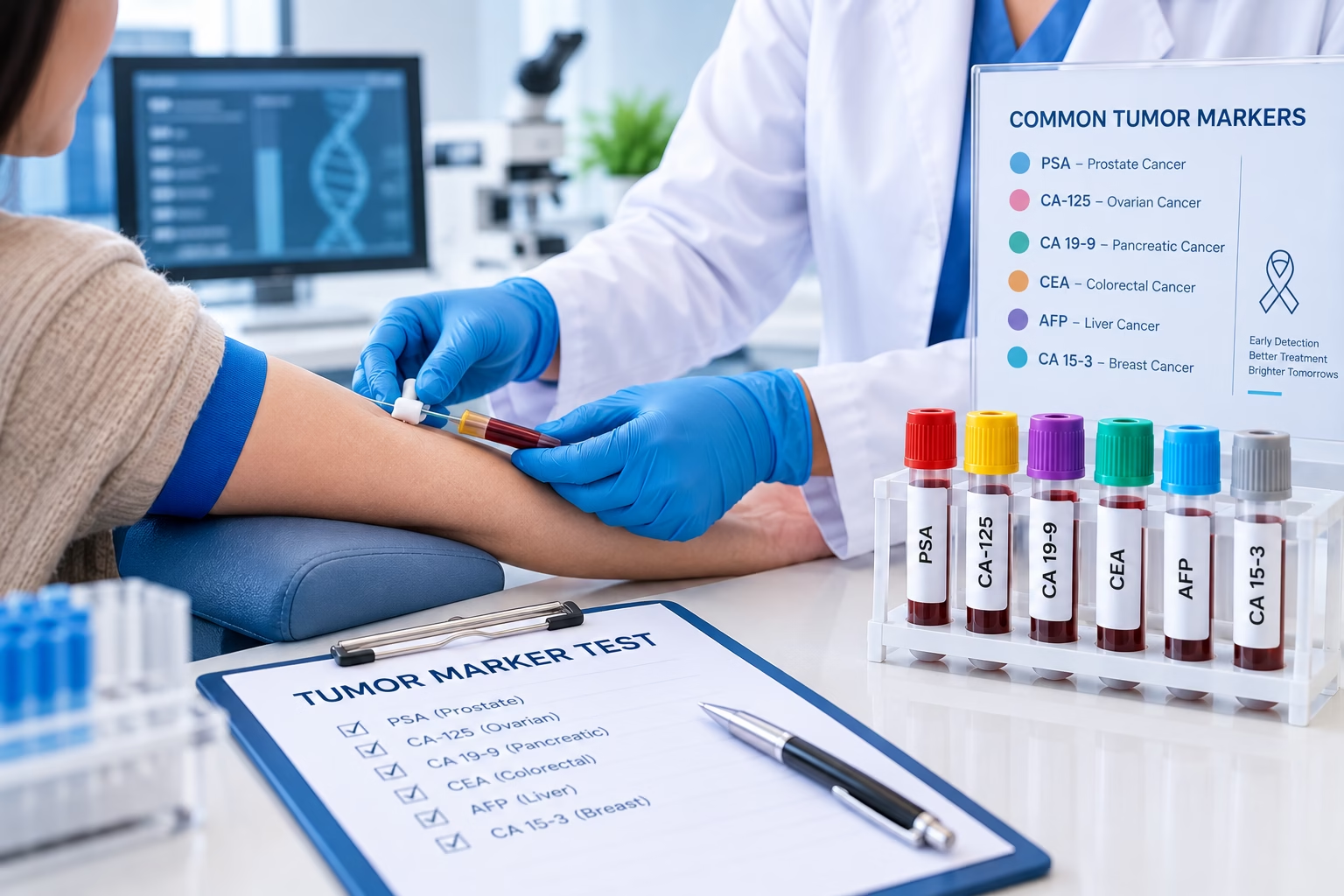
A tumor marker test is a laboratory test that measures certain substances or biological markers associated with cancer or other conditions. These markers may be found in blood, urine, tissue, or other body fluids, depending on the specific test.
Tumor marker testing can be used in different situations, including supporting the evaluation of certain cancers, monitoring treatment, assessing whether cancer has returned, and helping doctors make decisions about further testing or treatment.
However, a tumor marker test is not the same as a cancer diagnosis. A high tumor marker level does not automatically mean that a person has cancer, because non-cancerous conditions can also cause some markers to rise. Similarly, a person with cancer may have a normal tumor marker result.
Want to understand how tumor marker testing works? Read this complete guide to tumor marker tests to learn about common markers, uses, preparation, procedure, cost in Dubai, results, and what an abnormal result may mean.
What Is a Tumor Marker?
A tumor marker is a substance or biological characteristic that may provide information about cancer or the body’s response to cancer. Traditional tumor markers are often proteins or other substances that can be measured in blood or other body fluids.
Some tumor markers are produced by cancer cells, while others may be produced by normal cells in response to cancer or other conditions. Modern cancer care also uses genetic and molecular biomarkers found in tumor tissue or, in certain situations, blood.
Examples of commonly used tumor markers include:
- PSA
- CA-125
- CA 15-3
- CA 19-9
- CEA
- AFP
- Calcitonin
- Thyroglobulin
- Certain genetic and molecular markers
The marker selected depends on the suspected or diagnosed cancer and the reason for testing.
What Is a Tumor Marker Test?
A tumor marker test measures the level or presence of a specific marker in a biological sample.
Depending on the marker, the sample may be:
- Blood
- Urine
- Tumor tissue
- Bone marrow
- Other body fluids
Blood tests are among the most commonly recognized forms of tumor marker testing. Tumor marker testing is usually interpreted together with other information, such as symptoms, medical history, imaging studies, biopsy results, and other laboratory tests.
Why Are Tumor Marker Tests Done?
Tumor marker tests can serve different purposes depending on the cancer and the individual situation.
They may be used to:
- Support the evaluation of certain cancers
- Help assess the extent or stage of some cancers
- Monitor how a cancer responds to treatment
- Look for signs that cancer may have returned
- Help select certain treatments
- Provide additional information about a diagnosed cancer
- Investigate specific symptoms or abnormal findings
Tumor markers are particularly useful when levels can be measured repeatedly over time. Changes in the marker may provide information about how a known cancer is responding to treatment or whether it may have returned.
Can a Tumor Marker Test Detect Cancer?
A tumor marker test can provide useful information, but it should not be considered a standalone cancer detection test. Some tumor markers can be elevated in people who do not have cancer. At the same time, not everyone with a particular cancer produces high levels of its associated marker.
This means that a tumor marker result needs to be interpreted alongside other diagnostic information. For example, an elevated CA-125 does not automatically mean ovarian cancer, and an elevated PSA does not automatically mean prostate cancer. If a tumor marker result is abnormal, your doctor may recommend additional testing such as imaging, repeat laboratory testing, specialist assessment, or biopsy.
Tumor Marker Test vs. Cancer Screening
These two terms are often confused.
Cancer Screening
Cancer screening is designed to look for certain cancers or precancerous changes in people who may not have symptoms.
Examples include:
- Mammography
- Cervical cancer screening
- Colorectal cancer screening
- Low-dose CT for eligible people at high risk of lung cancer
Tumor Marker Testing
Tumor marker testing measures specific substances or biological markers associated with certain cancers. Some tumor markers have limited roles in screening selected high-risk people, but many are primarily used after a cancer diagnosis or when there is a specific clinical reason for testing.
Therefore, a general tumor marker panel should not automatically be considered a substitute for established cancer screening. For a broader explanation of preventive testing, read our guide to Cancer Screening: Types, Tests, Cost & Results.
Common Tumor Marker Tests
Different tumor markers are associated with different cancers and clinical situations.
PSA Test
Prostate-specific antigen (PSA) is a protein produced by prostate cells. PSA testing may be used as part of prostate cancer evaluation and, in appropriate situations, prostate cancer screening discussions.
An elevated PSA can occur for reasons other than prostate cancer, including benign prostate conditions. Therefore, PSA results need to be interpreted in context.
CA-125 Test
CA-125 is a blood marker that may be elevated in some ovarian cancers. However, CA-125 can also increase because of non-cancerous conditions. It is therefore not a standalone diagnostic test for ovarian cancer. CA-125 may be used in selected situations to support evaluation, monitor treatment, or assess possible recurrence.
CA 15-3 Test
CA 15-3 is associated primarily with breast cancer. It is more commonly used in specific situations involving known breast cancer, particularly for monitoring disease or treatment response, rather than as a standalone screening test for everyone.
CA 19-9 Test
CA 19-9 may be associated with cancers involving the pancreas and certain other parts of the digestive system. It can also become elevated in some non-cancerous conditions. The test may be used alongside other investigations when evaluating certain cancers or monitoring known disease.
CEA Test
Carcinoembryonic antigen (CEA) can be associated with colorectal cancer and several other cancers. CEA is commonly used to monitor certain diagnosed cancers and assess treatment response or recurrence rather than as a general screening test for healthy individuals.
AFP Test
Alpha-fetoprotein (AFP) is a protein that can be elevated in certain liver cancers and some germ cell tumors. AFP testing may be used with imaging and other investigations to help evaluate specific clinical situations.
Thyroglobulin Test
Thyroglobulin is a protein produced by thyroid cells. It can be used in certain people with thyroid cancer to help monitor treatment and look for evidence of persistent or recurrent disease.
Calcitonin Test
Calcitonin may be useful in the evaluation and monitoring of medullary thyroid cancer.
The test is generally ordered when there is a specific clinical reason rather than as a routine test for everyone.
Tumor Marker Test for Women
Tumor marker testing for women may include markers such as:
- CA-125
- CA 15-3
- CEA
- AFP
The appropriate test depends on the individual’s symptoms, medical history, risk factors, and the reason for testing. It is important not to interpret a female tumor marker panel as a test that can rule out all types of cancer.
For example, CA-125 is associated with ovarian cancer but can also rise in non-cancerous conditions, while CA 15-3 has a more specific role in monitoring certain breast cancer cases.
Tumor Marker Test for Men
Tumor marker testing for men may include:
- PSA
- AFP
- CEA
- Other markers based on the suspected condition
PSA is particularly associated with prostate evaluation. If a PSA result is abnormal, additional assessment may be required before determining the cause. A PSA result alone cannot confirm prostate cancer.
Tumor Markers for Breast Cancer
Some tumor markers can be used in the management of breast cancer. CA 15-3 and CA 27.29 are examples of blood-based markers that may be used in selected situations.
However, these markers are generally not used as standalone breast cancer screening tests for people without a cancer diagnosis. Mammography remains an important established screening method for breast cancer in appropriate populations.
Tumor Markers for Ovarian Cancer
CA-125 is one of the best-known tumor markers associated with ovarian cancer. However, an elevated CA-125 does not automatically indicate ovarian cancer.
CA-125 can increase because of several non-cancerous conditions, so doctors may use it alongside imaging, symptoms, examination findings, and other tests. A tumor marker result should therefore be interpreted as one part of the overall evaluation rather than as a final diagnosis.
Tumor Markers for Prostate Cancer
PSA is one of the most commonly known tumor markers used in prostate evaluation. A PSA test measures the amount of prostate-specific antigen in the blood.
An increased PSA may occur with prostate cancer, but it can also be associated with benign prostate enlargement, inflammation, infection, or other prostate-related conditions. Depending on the result and individual risk factors, a doctor may recommend repeat testing, examination, imaging, or further investigation.
Tumor Markers for Colorectal Cancer
CEA is a commonly used tumor marker in colorectal cancer care. It is mainly useful for monitoring people who have already been diagnosed with colorectal cancer.
Changes in CEA levels may provide information about treatment response or possible recurrence, but CEA is not considered a standalone screening test for colorectal cancer. People who are eligible for colorectal cancer screening should follow the recommended screening method rather than relying on a tumor marker blood test.
Tumor Markers for Liver Cancer
AFP can be used in the evaluation and management of certain liver cancers. Depending on the clinical situation, AFP may be assessed alongside imaging and other liver-related investigations. An elevated AFP is not specific to cancer and can occur in other conditions.
How Is a Tumor Marker Test Done?
The procedure depends on the type of marker being tested. For a blood-based tumor marker test, the process is usually straightforward.
Step 1: Test Selection
A healthcare professional determines which tumor marker is appropriate based on your symptoms, medical history, cancer diagnosis, risk factors, or previous test results.
Step 2: Preparation
Most blood-based tumor marker tests do not require extensive preparation.
However, preparation requirements can vary depending on the specific marker and whether other blood tests are being performed at the same time.
Step 3: Blood Sample Collection
A trained healthcare professional collects a small blood sample from a vein in your arm. The sample is placed into an appropriate tube and sent to the laboratory.
Step 4: Laboratory Analysis
The laboratory measures the selected marker using the appropriate testing method.
Step 5: Results and Interpretation
The result is compared with the laboratory’s reference range and interpreted alongside your clinical information. A single result usually provides less information than a series of results taken over time, particularly when the test is being used to monitor an established cancer.
How to Prepare for a Tumor Marker Test
Preparation depends on the specific test.
Before your appointment:
- Ask whether fasting is required.
- Follow any laboratory instructions carefully.
- Tell your healthcare provider about medications you take.
- Mention vitamins and supplements.
- Inform the provider about previous cancer diagnoses.
- Bring previous tumor marker results if available.
- Tell your provider about recent infections or other medical conditions.
- Ask whether the test is being used for screening, diagnosis, or monitoring.
Do not stop prescribed medication unless your healthcare provider specifically instructs you to do so.
Can You Get a Tumor Marker Test at Home?
Yes. Some blood-based tumor marker tests can be arranged through home sample collection. A trained professional collects the blood sample at your home and sends it to the laboratory for analysis.
Home collection can be convenient for people who prefer privacy or have difficulty visiting a diagnostic center.
Tumor Marker Test Cost in Dubai
The cost of a tumor marker test in Dubai depends on the specific marker or panel being tested.
For example, PSA, CA-125, CA 19-9, CEA, and other markers may have different prices. Health 24/7 currently lists tumor marker testing in Dubai starting from AED 250. The final price depends on the selected marker or combination of tests.
Before booking, confirm:
- Which tumor markers are included
- Whether blood collection is included
- Whether home collection is available
- Expected report time
- Total cost
- Whether medical consultation is included
Understanding Tumor Marker Test Results
Tumor marker results are usually reported as a numerical value and may include a laboratory reference range. The reference range can vary depending on the laboratory and testing method.
What Does a High Tumor Marker Mean?
A high tumor marker does not automatically mean cancer.
Some tumor markers can become elevated because of:
- Benign conditions
- Inflammation
- Infection
- Organ-related conditions
- Certain medications or physiological factors
- Cancer
The meaning of an elevated result depends on the specific marker and your overall clinical situation.
What Does a Normal Tumor Marker Mean?
A normal result does not always rule out cancer.
Some cancers do not produce large amounts of a particular marker, and some people with cancer may have normal marker levels. Therefore, a normal tumor marker should not be interpreted as proof that cancer is absent when symptoms or imaging findings suggest otherwise.
Why Are Repeat Tumor Marker Tests Sometimes Done?
Doctors may measure tumor markers repeatedly when monitoring a known cancer. The trend over time can sometimes be more informative than a single result.
For example, decreasing levels during treatment may suggest that treatment is having an effect, while rising levels after treatment may prompt further evaluation for possible recurrence. However, marker changes should always be interpreted alongside other clinical information.
What Happens If a Tumor Marker Is Elevated?
An elevated result does not automatically mean that you have cancer.
Depending on the specific marker and your circumstances, your doctor may recommend:
- Reviewing your medical history and symptoms
- Repeating the tumor marker test
- Performing additional blood tests
- Ordering imaging
- Referring you to a specialist
- Performing a biopsy when clinically appropriate
A biopsy may be needed to establish a cancer diagnosis because tumor marker testing alone is generally insufficient.
Tumor Marker Test vs. Biopsy
A tumor marker test and a biopsy provide different types of information. A tumor marker test measures a marker in blood or another sample. A biopsy involves removing a sample of tissue or cells so that it can be examined under a microscope.
Tumor markers can support diagnosis or monitoring, but a biopsy may be necessary to confirm whether suspicious tissue is cancerous.
Tumor Marker Test vs. Genetic Cancer Test
These tests are also different. A tumor marker test measures specific substances or biological characteristics associated with cancer.
A genetic cancer test may look for inherited genetic variants that can increase a person’s risk of developing certain cancers.
Other molecular tests may examine genetic changes in an existing tumor to help guide treatment. Therefore, genetic testing and tumor marker testing answer different medical questions.
Are Tumor Marker Tests Safe?
Blood-based tumor marker tests are generally simple and minimally invasive because they usually require only a blood sample. You may experience a brief pinch during needle insertion, and mild bruising can occasionally occur.
Other tumor marker tests may involve urine collection, tissue sampling, or biopsy, depending on the marker and clinical purpose.
How Long Does a Tumor Marker Test Take?
Blood collection itself is usually quick and may take only a few minutes. Health 24/7 states that blood sample collection for its tumor marker testing generally takes around 5–10 minutes. The laboratory report turnaround depends on the specific test and laboratory.
Who Should Consider a Tumor Marker Test?
A tumor marker test may be recommended when there is a specific medical reason, such as:
- A known cancer diagnosis
- Monitoring cancer treatment
- Monitoring for recurrence
- A suspicious imaging finding
- Certain symptoms
- A high-risk situation
- Follow-up after previous abnormal testing
- Evaluation of a specific cancer-related condition
Whether testing is appropriate depends on the particular marker and your individual circumstances.
A tumor marker panel should not automatically be considered necessary simply because it is available as a preventive package.
Can Healthy People Get Tumor Marker Tests?
Some tumor marker tests may be offered to people who want preventive testing. However, this does not mean that every tumor marker is recommended as a routine screening test for healthy people.
Many tumor markers have limitations because they may not be sensitive or specific enough to detect cancer reliably in people without symptoms. NCI notes that circulating tumor markers generally have not worked well as broad cancer screening tools because they can miss cancers or produce abnormal results in people who do not have cancer.
If you are considering testing without symptoms, discuss the benefits and limitations with a healthcare professional.
Tumor Marker Tests and Cancer Monitoring
One of the important uses of tumor markers is monitoring an already diagnosed cancer.
A doctor may measure the same marker at different points during treatment.
For example, the results may help assess:
- Whether treatment appears to be working
- Whether the marker is decreasing
- Whether the disease may have returned
- Whether additional evaluation is needed
Tumor marker monitoring is usually interpreted together with imaging, examination, symptoms, and other test results.
What Are the Limitations of Tumor Marker Tests?
Tumor marker tests have several important limitations.
They Are Not Always Specific
A marker can rise because of a non-cancerous condition.
They Are Not Always Sensitive
Some people with cancer may not have elevated levels of the associated marker.
One Result May Not Be Enough
A single result may not provide enough information to understand what is happening.
Reference Ranges Can Vary
Laboratories may use different methods and reference ranges.
They Do Not Replace Established Screening
For cancers with recommended screening programs, appropriate screening should not be replaced by a general tumor marker panel.
Additional Testing May Be Necessary
An abnormal marker may lead to imaging, repeat testing, specialist evaluation, or biopsy.
These limitations are why tumor markers should be interpreted in context rather than used alone to diagnose cancer.
Where Can You Get a Tumor Marker Test in Dubai?
Tumor marker testing is available through diagnostic laboratories and healthcare providers in Dubai.
When choosing a testing provider, consider:
- Whether the laboratory is appropriately approved
- Which tumor markers are included
- Whether the test is appropriate for your specific purpose
- Home sample collection availability
- Report turnaround time
- Data privacy
- Clear pricing
- Whether medical guidance is available for abnormal results
Book Your Tumor Marker Test at Health 24/7 Today
A tumor marker test can provide useful information in the right clinical situation, particularly when it is used alongside imaging, biopsy, examination, and other laboratory findings.
If you have been advised to undergo tumor marker testing or want to discuss which marker may be appropriate for your situation, Health 24/7 can coordinate testing through approved diagnostic laboratories in Dubai.
Frequently Asked Questions
Is a tumor marker test a cancer test?
A tumor marker test measures substances associated with certain cancers or other conditions. It can support cancer evaluation or monitoring, but it does not automatically diagnose cancer.
Can a tumor marker test detect cancer early?
Some tumor markers have limited screening applications in specific situations, but most are not reliable standalone screening tests for cancer in people without symptoms.
Does a high tumor marker mean cancer?
No. A high result can occur because of cancer or non-cancerous conditions. Further evaluation may be required.
Can a normal tumor marker rule out cancer?
No. Some cancers do not cause elevated levels of their associated markers.
What are the most common tumor marker tests?
Commonly used markers include PSA, CA-125, CA 15-3, CA 19-9, CEA, and AFP, although their uses differ significantly.
Do tumor marker tests require fasting?
Many blood-based tumor marker tests do not require special preparation, but requirements can vary depending on the specific test and any additional tests being performed.
Can I get a tumor marker test at home in Dubai?
Selected blood-based tumor marker tests can be arranged through home sample collection services in Dubai.
How much does a tumor marker test cost in Dubai?
Health 24/7 currently lists tumor marker testing from AED 250. The final cost depends on the selected marker or panel.
Is a tumor marker test painful?
Blood-based tumor marker testing involves a routine blood draw. You may feel a brief pinch during sample collection.
What should I do if my tumor marker result is high?
Do not assume that you have cancer based on the result alone. Discuss the result with your healthcare provider, who may recommend repeat testing, imaging, or other diagnostic investigations.