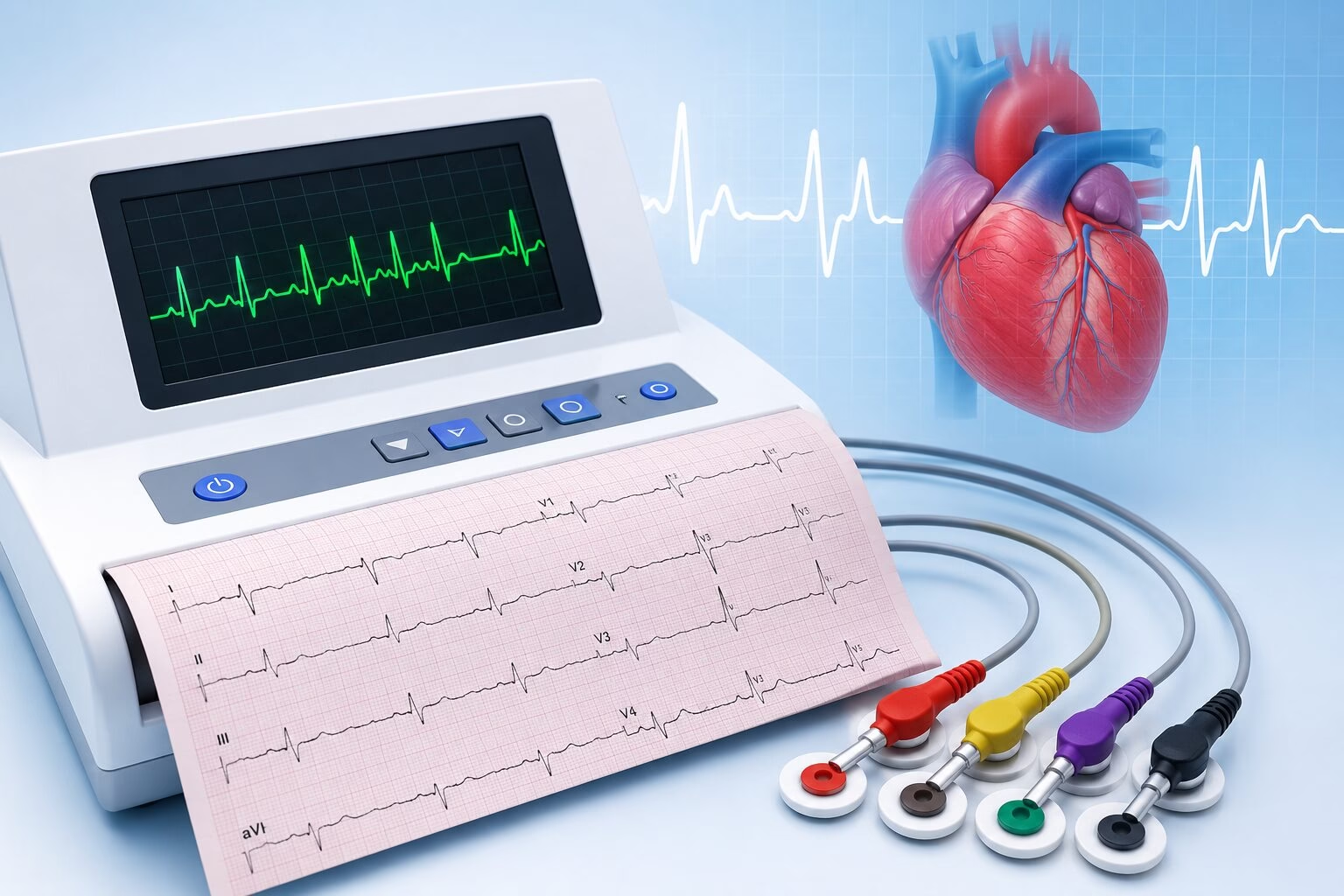
Your heart beats thousands of times every day, and each beat is controlled by electrical signals that help maintain a steady rhythm. When something affects these signals, you may notice symptoms such as a racing heartbeat, palpitations, dizziness, chest discomfort, or shortness of breath. An ECG test is one of the simplest ways for healthcare professionals to check how your heart is beating.
An ECG, or electrocardiogram, is a quick, painless, and non-invasive test that records the electrical activity of the heart. It can help identify abnormal heart rhythms and other changes that may require further cardiac evaluation.
At Health 24/7, ECG testing is available as part of our cardiac diagnostic services, helping patients receive timely information about their heart health. This guide covers everything you need to know about an ECG test, including why it is performed, how it works, what it can detect, how to prepare, and how to understand your results.
What Is an ECG (Electrocardiogram) Test?
An ECG (electrocardiogram) is a diagnostic test that records the electrical signals produced by your heart as it beats. You may also see it referred to as an EKG, particularly in some countries, but both terms describe the same test.
Every heartbeat begins with an electrical impulse. These impulses travel through the heart and cause its chambers to contract in a coordinated pattern, allowing blood to circulate throughout the body.
An ECG records these electrical signals and displays them as a series of waves on a monitor or printed report. Healthcare professionals can examine these patterns to evaluate your heart rate, rhythm, and electrical conduction.
An ECG may provide information about:
- Heart rate
- Heart rhythm
- Electrical conduction through the heart
- Possible rhythm abnormalities
- Changes that may suggest heart strain
- Certain signs associated with a current or previous heart attack
The test does not send electricity into your body. The electrodes simply detect the electrical activity naturally produced by your heart.
How Does an ECG Test Work?
An ECG uses small adhesive patches called electrodes, which are attached to specific areas of your chest, arms, and legs.
Thin wires connect these electrodes to the ECG machine. As your heart beats, the electrodes detect tiny electrical signals and transmit them to the machine.
The ECG machine then converts these signals into wave patterns. Different parts of the waveform represent different stages of each heartbeat.
Healthcare professionals examine factors such as:
- How quickly the heart is beating
- Whether the rhythm is regular
- How electrical signals travel through the heart
- Whether certain waveform changes are present
A standard resting ECG usually takes only a few minutes to record and causes no pain.
Why Is an ECG Test Done?
Doctors may recommend an ECG for many reasons, from investigating symptoms to monitoring an existing heart condition.
Some of the most common reasons include:
Chest Pain or Discomfort
Chest pain has many possible causes, ranging from muscle strain and digestive problems to heart-related conditions. An ECG is often one of the first tests performed when a healthcare professional suspects a cardiac cause.
However, an ECG alone cannot identify every cause of chest pain, so additional blood tests or imaging may be necessary.
Heart Palpitations
Palpitations can make your heart feel as though it is racing, pounding, fluttering, or skipping beats.
An ECG can help determine whether these sensations are associated with an abnormal heart rhythm.
Irregular Heartbeat
If your doctor detects an irregular pulse during an examination, an ECG can provide more information about the heart’s rhythm and electrical activity.
Shortness of Breath
Breathing difficulties can have many causes. When a heart-related problem is suspected, an ECG may be included as part of the initial evaluation.
Dizziness or Fainting
Sudden dizziness, light-headedness, or fainting can sometimes occur when the heart is beating too quickly, too slowly, or irregularly.
An ECG may help identify rhythm abnormalities that could contribute to these symptoms.
Monitoring Existing Heart Conditions
People diagnosed with certain heart conditions may undergo ECG testing periodically to monitor their heart rhythm and detect changes over time.
Before Certain Medical Procedures
An ECG may be requested before surgery or another medical procedure, particularly for patients with cardiovascular risk factors or known heart conditions.
What Can an ECG Detect?
An ECG provides important information about the heart’s electrical activity. However, it should always be interpreted alongside symptoms, medical history, examination findings, and other tests when required.
Abnormal Heart Rhythms
One of the main uses of an ECG is detecting arrhythmias, which occur when the heart beats too quickly, too slowly, or irregularly.
Examples include:
- Atrial fibrillation
- Tachycardia
- Bradycardia
- Certain conduction abnormalities
Some rhythm problems occur intermittently and may not appear during a short resting ECG. In such situations, longer-term heart monitoring may be recommended.
Signs of a Heart Attack
Certain ECG changes can occur during a heart attack and may help doctors determine which part of the heart is affected.
An ECG may also show changes associated with a previous heart attack. However, a normal ECG does not completely rule out a heart attack, so doctors may use additional tests such as cardiac blood tests when clinically necessary.
Reduced Blood Flow to the Heart
Changes in the ECG waveform can sometimes suggest that part of the heart muscle is not receiving enough blood and oxygen.
If symptoms mainly occur during physical activity, additional testing may be required to assess how the heart responds to exercise.
Heart Enlargement or Strain
Certain ECG patterns may suggest enlargement or increased strain affecting parts of the heart.
Further tests, particularly an echocardiogram, may then be recommended to examine the heart’s structure and pumping function in greater detail.
Effects of Certain Medications
Some medications can affect the heart’s rhythm or electrical conduction. Doctors may use ECG testing to monitor patients taking medicines known to influence cardiac electrical activity.
Types of ECG Tests
Not every heart rhythm problem appears during a short examination. Different types of ECG monitoring are therefore available depending on the patient’s symptoms.
Resting ECG
A resting ECG is the standard and most commonly performed type.
You lie comfortably while electrodes are placed on your chest, arms, and legs. The heart’s electrical activity is recorded while your body is at rest.
The recording itself usually takes only a few minutes.
Exercise ECG or Treadmill Stress Test
An exercise ECG records the heart’s electrical activity while you walk on a treadmill or use another form of controlled exercise.
As the intensity gradually increases, healthcare professionals monitor your:
- Heart rate
- Heart rhythm
- Blood pressure
- ECG changes
- Symptoms
A treadmill stress test may be recommended when symptoms such as chest discomfort or breathlessness mainly occur during physical activity.
Holter Monitoring
A Holter monitor is a portable device that continuously records the heart’s electrical activity, commonly for 24 to 48 hours or longer, depending on the clinical need.
It can be useful when symptoms such as palpitations occur occasionally and are not captured during a standard resting ECG.
Event Monitor
An event monitor records heart activity over a longer period and may be useful when symptoms happen less frequently.
Depending on the device, recording may start automatically when an abnormal rhythm is detected or when the patient activates it after experiencing symptoms.
ECG Test Procedure: What to Expect
A standard resting ECG is straightforward and usually requires only a short appointment.
Step 1: Getting Ready for the ECG
You will usually be asked to lie comfortably on an examination bed. The healthcare professional will need access to your chest and may provide appropriate covering during the procedure.
Step 2: Electrode Placement
Small adhesive electrodes are placed on specific areas of the chest, arms, and legs.
In some cases, small areas of chest hair may need to be trimmed so the electrodes attach securely to the skin.
Step 3: Recording Your Heart Activity
Once the electrodes are connected, you will be asked to relax, remain still, and breathe normally.
The ECG machine records your heart’s electrical activity. Movement or talking during the recording can interfere with the signal, so remaining still helps produce a clear result.
Step 4: Completing the ECG
After enough information has been recorded, the electrodes are removed.
A resting ECG is painless and typically takes around 5 to 10 minutes, although the overall appointment may take slightly longer.
You can usually return to your normal activities immediately after the test.
How to Prepare for an ECG Test
A standard resting ECG requires very little preparation. You can usually eat, drink, and take your regular medications as normal unless your healthcare provider gives you different instructions.
Before your ECG appointment:
- Wear comfortable clothing that allows easy access to your chest.
- Avoid applying body lotion, creams, or oils to your chest on the day of the test, as they can make it difficult for the electrodes to stick properly.
- Inform your healthcare provider about any medications or supplements you are taking.
- Avoid strenuous physical activity immediately before the test if your healthcare provider has instructed you to do so.
- Try to arrive a little early so you have time to relax before the recording.
For a standard resting ECG, fasting is generally not required. However, if you are undergoing other cardiac tests at the same appointment, you may receive additional preparation instructions.
How Long Does an ECG Test Take?
One of the main advantages of an ECG is how quickly it can be performed.
The actual electrical recording may take only a few minutes, while the entire appointment for a standard resting ECG typically takes around 5 to 10 minutes.
Additional time may be required for registration, electrode placement, or reviewing your medical history.
Tests such as a treadmill stress test or longer-term ECG monitoring naturally require more time than a standard resting ECG.
Is an ECG Test Safe?
Yes. A standard ECG is considered a very safe diagnostic test.
The electrodes placed on your skin only record the electrical signals naturally produced by your heart. They do not send electricity into your body.
An ECG also:
- Does not use radiation
- Does not require injections for a standard resting test
- Is non-invasive
- Can be repeated when medically necessary
- Usually causes no pain
Some people may experience minor skin irritation when the adhesive electrodes are removed, but this is generally temporary.
ECG vs. Echocardiogram: What’s the Difference?
ECG and echocardiogram are both used to assess heart health, but they provide very different types of information.
An ECG measures the electrical activity of the heart, while an echocardiogram uses ultrasound technology to produce moving images of the heart’s structures.
|
Feature |
ECG |
Echocardiogram |
|
Main Purpose |
Records electrical activity |
Examines heart structure and function |
|
Technology |
Skin electrodes |
Ultrasound |
|
Evaluates Heart Rhythm |
Yes |
Limited |
|
Shows Heart Valves |
No |
Yes |
|
Shows Heart Chambers |
Limited indirect information |
Yes |
|
Evaluates Pumping Function |
Not directly |
Yes |
|
Radiation |
No |
No |
|
Typical Duration |
5–10 minutes |
Around 20–60 minutes |
For example, an ECG may identify an abnormal heart rhythm, while an echocardiogram can show how effectively the heart is pumping and whether its valves are functioning normally.
If your doctor wants a closer look at your heart’s chambers, valves, and pumping function after an ECG, an echocardiogram may be recommended as the next diagnostic step.
If you want a more detailed comparison of these two heart tests, read our guide on Echo vs. ECG: differences, uses, and which heart test you need to understand when each test may be recommended.
ECG vs. Treadmill Stress Test
A resting ECG records your heart’s electrical activity while you are relaxed. However, certain heart-related changes may only become noticeable when your heart is working harder.
A treadmill stress test records ECG activity while you exercise under medical supervision. The speed and incline of the treadmill are gradually increased while your heart rhythm, heart rate, blood pressure, symptoms, and ECG patterns are monitored.
A doctor may recommend exercise testing when symptoms such as chest discomfort or shortness of breath appear during physical activity or when they need to assess how the heart responds to exertion.
If symptoms mainly occur while walking or exercising, a treadmill stress test can provide additional information that may not appear during a resting ECG.
ECG Test Cost in Dubai
The cost of an ECG test in Dubai varies depending on the healthcare facility, whether a doctor’s consultation is included, and whether additional cardiac investigations are required.
A basic resting ECG is generally less expensive than more extensive cardiac tests such as an echocardiogram, Holter monitoring, or treadmill stress testing.
Factors that can affect the final cost include:
- Type of ECG or monitoring required
- Doctor’s consultation fees
- Diagnostic centre or hospital
- Additional cardiac tests
- Insurance coverage
If you have health insurance, coverage may depend on your policy and whether the test has been requested by a doctor.
For the most accurate and current price, contact Health 24/7 before your appointment to confirm the ECG test cost and available booking options.
Understanding Your ECG Results
An ECG produces a series of waves that represent the electrical activity occurring during each heartbeat.
Healthcare professionals evaluate the shape, timing, and spacing of these waves along with your heart rate and rhythm.
Normal ECG Results
A normal ECG generally shows that the heart is beating with an expected rhythm and that electrical signals are travelling through the heart in an appropriate pattern.
A normal resting heart rate for many adults falls between 60 and 100 beats per minute, although healthy individuals may sometimes have rates outside this range.
Importantly, a normal ECG does not rule out every heart condition. Some problems are intermittent or may only become apparent during exercise or longer-term monitoring.
Abnormal ECG Results
An abnormal ECG can occur for many reasons and does not automatically mean you have serious heart disease.
Possible findings include:
- Atrial fibrillation or other arrhythmias
- Tachycardia
- Bradycardia
- Electrical conduction abnormalities
- Changes associated with heart strain
- Patterns that may suggest reduced blood supply
- Changes associated with a current or previous heart attack
Your doctor will interpret the ECG alongside your symptoms, medical history, physical examination, and other investigations.
Depending on the findings, further tests such as an echocardiogram, blood tests, Holter monitoring, or a treadmill stress test may be recommended.
When Should You Seek Urgent Medical Attention?
An ECG appointment should not replace emergency medical assessment when potentially serious symptoms are present.
Seek urgent medical care if you experience symptoms such as:
- Severe or persistent chest pain
- Sudden severe shortness of breath
- Fainting or loss of consciousness
- Chest pressure accompanied by sweating, nausea, or significant weakness
- A rapid or irregular heartbeat accompanied by severe dizziness or fainting
Heart-related emergencies require prompt medical assessment. Do not wait for a routine ECG appointment if your symptoms are severe, sudden, or worsening.
Where Can You Get an ECG Test in Dubai?
When choosing where to have an ECG, look for a healthcare facility with trained professionals and access to additional cardiac investigations when necessary.
Important factors include:
- Qualified healthcare professionals
- Modern ECG equipment
- Accurate interpretation
- Convenient appointments
- Access to complementary cardiac testing
- Patient-focused care
At Health 24/7, ECG (Electrocardiogram) testing is available as part of our diagnostic services. Our team helps patients undergo heart rhythm assessment in a professional and comfortable environment, with further evaluation recommended when clinically appropriate.
Book Your ECG Test at Health 24/7 Today
Whether you’ve been experiencing palpitations, an irregular heartbeat, dizziness, or have been advised by your doctor to undergo cardiac testing, an ECG can provide valuable information about your heart’s electrical activity.
The test is quick, painless, and requires minimal preparation, making it one of the simplest ways to begin evaluating heart rhythm concerns.
Book your ECG test at Health 24/7 today and take the next step toward understanding your heart health with reliable diagnostic support.
Frequently Asked Questions
What is an ECG test used for?
An ECG records the electrical activity of the heart. It is commonly used to evaluate heart rate and rhythm and to identify certain abnormalities that may be associated with arrhythmias, heart strain, or other cardiac conditions.
How long does an ECG test take?
A standard resting ECG generally takes around 5 to 10 minutes, although the complete appointment may take slightly longer due to preparation and electrode placement.
Is an ECG test painful?
No. An ECG is painless and non-invasive. Small adhesive electrodes are placed on the skin to record the heart’s natural electrical activity.
Do I need to fast before an ECG?
Fasting is generally not required for a standard resting ECG. You can normally eat and drink as usual unless you have been given different instructions for another test being performed at the same appointment.
What is a normal ECG result?
A normal ECG generally shows an expected heart rhythm and electrical conduction pattern. However, ECG results should always be interpreted by a healthcare professional in the context of your symptoms and medical history.
Can an ECG detect a heart attack?
An ECG can show electrical changes associated with some heart attacks and is an important part of emergency cardiac assessment. However, a normal ECG alone cannot completely rule out a heart attack, so additional tests such as cardiac blood tests may be required.
Can an ECG detect blocked arteries?
An ECG does not directly show blocked coronary arteries. It may sometimes reveal changes suggesting reduced blood flow to the heart, but additional investigations may be necessary to determine whether coronary artery disease is present.
What is the difference between an ECG and an echocardiogram?
An ECG records the heart’s electrical activity and rhythm, while an echocardiogram uses ultrasound to examine the heart’s structure, valves, chambers, and pumping function.
How much does an ECG test cost in Dubai?
ECG prices vary between healthcare facilities and may depend on whether consultation or additional cardiac testing is included. Contact Health 24/7 directly for the latest ECG test price and insurance information.