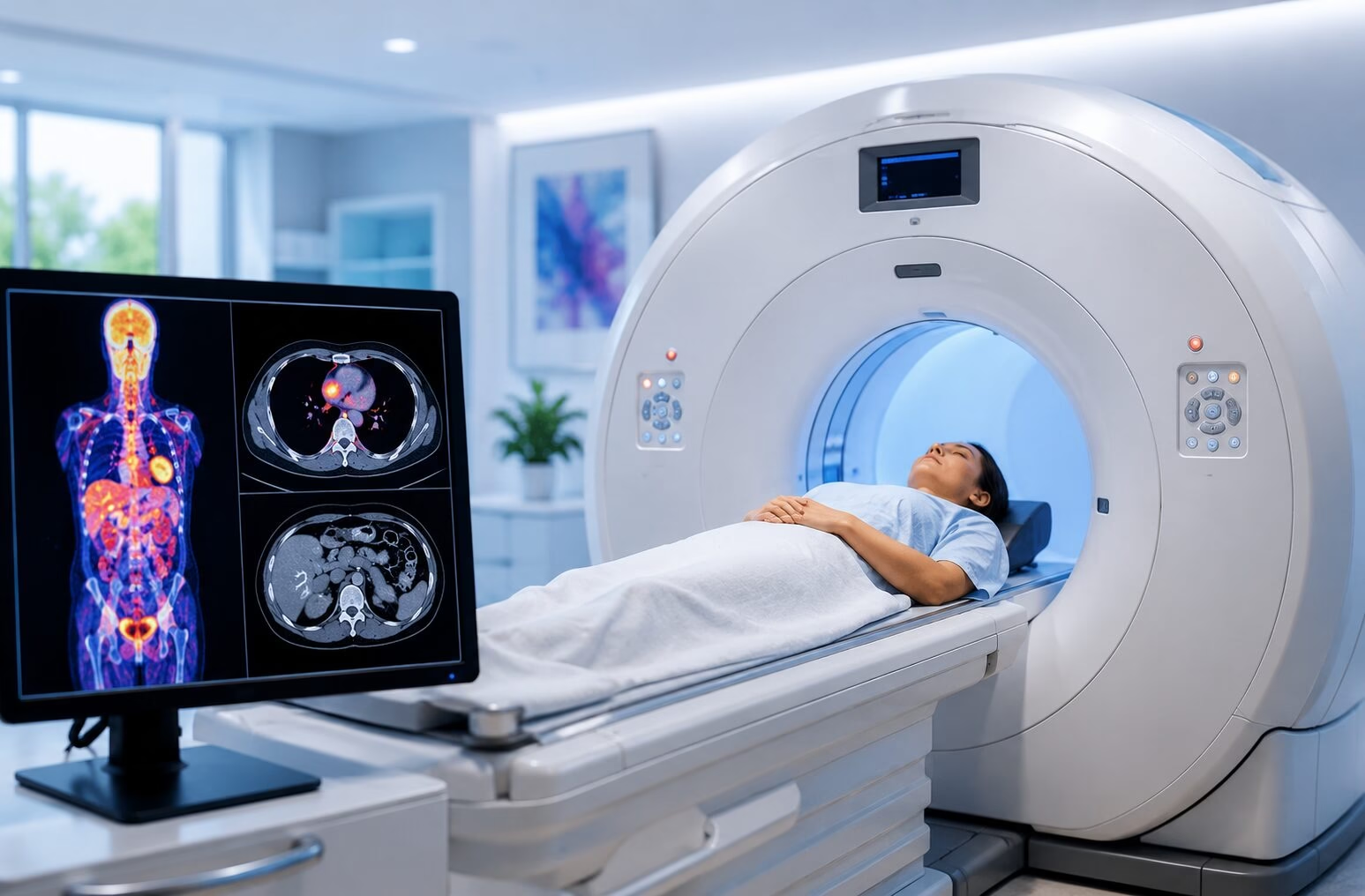
When doctors need to understand not only what an abnormal area looks like but also how active it is, a PET-CT scan can provide valuable information. Unlike many routine imaging tests that mainly show the body’s structure, PET-CT combines information about tissue activity with detailed anatomical images.
A PET-CT scan is commonly associated with cancer diagnosis and treatment planning, but it may also be used for selected neurological and cardiac conditions. The examination combines Positron Emission Tomography (PET) with Computed Tomography (CT) to provide a more comprehensive picture of certain conditions.
If your doctor has recommended a PET-CT, understanding how the scan works, why it is performed, how to prepare, and what the results may mean can make the process less stressful. This guide explains the PET-CT procedure, common uses, preparation, safety, cost in Dubai, results, and frequently asked questions.
What Is a PET-CT Scan?
A PET-CT scan is an advanced diagnostic imaging examination that combines two different imaging techniques in a single session.
PET (Positron Emission Tomography) provides information about metabolic or biological activity in tissues. A small amount of a radioactive tracer is administered to the patient, and the PET scanner detects the tracer’s distribution in the body.
CT (Computed Tomography) uses X-rays to create detailed cross-sectional images of the body’s internal structures.
When these images are combined, doctors can compare areas of increased metabolic activity with their precise anatomical location. This can be particularly useful when evaluating cancer, determining the extent of disease, or monitoring how a condition responds to treatment.
How Does a PET-CT Scan Work?
A PET-CT examination involves several stages. The exact process can vary depending on the type of tracer being used and the reason for the examination.
Radiotracer Injection
A small amount of a radioactive tracer is administered, usually through an injection. For many oncology PET-CT examinations, a glucose-based tracer called FDG may be used.
The tracer travels through the bloodstream and is taken up by tissues in the body.
Waiting Period
After receiving the tracer, you will usually need to rest quietly for a period of time. This allows the tracer to distribute through the body and accumulate in tissues.
You may be asked to avoid unnecessary movement, talking, or physical activity during this period.
CT Imaging
You will then lie on the scanning table while the CT portion of the examination is performed. The CT component provides detailed anatomical information about the body’s structures.
PET Imaging
The PET scanner detects signals from the radiotracer and creates images showing areas of increased or decreased metabolic activity.
Combining the Images
The PET and CT images are combined to help healthcare professionals understand both the location and activity of an abnormal area.
This combination can provide information that may not be available from either examination alone.
Why Is a PET-CT Scan Done?
Doctors may recommend PET-CT when they need additional information about abnormal tissue activity or disease progression.
Common reasons include:
- Cancer detection and staging
- Evaluating whether cancer has spread
- Monitoring response to cancer treatment
- Looking for possible recurrence
- Assessing unexplained masses or abnormal growths
- Evaluating selected neurological conditions
- Assessing certain cardiac conditions
PET-CT is especially valuable in oncology because metabolic changes may sometimes become apparent before significant structural changes can be seen on conventional imaging.
However, PET-CT findings do not automatically confirm cancer. Increased tracer uptake can occur for several reasons, including some inflammatory or infectious processes, so results must be interpreted in the context of the patient’s medical history and other investigations.
What Can a PET-CT Scan Detect?
A PET-CT scan can help identify areas of abnormal metabolic activity throughout the body.
Depending on the tracer and clinical indication, it may help doctors evaluate:
- Primary tumours
- Possible cancer spread
- Recurrent disease
- Treatment response
- Certain inflammatory processes
- Selected neurological abnormalities
- Selected cardiac conditions
The exact information provided depends on the tracer used and the reason for the scan. PET-CT is therefore not a single test for every medical condition; the protocol is selected according to the patient’s clinical needs.
PET-CT Scan for Cancer
PET-CT is widely used in cancer care because it can provide both metabolic and anatomical information.
Cancer Staging
After a cancer diagnosis, doctors may use PET-CT to assess whether the disease has spread to lymph nodes or other parts of the body.
This information can help determine the stage of disease and support treatment planning.
Monitoring Cancer Treatment
PET-CT may be used during or after treatment to assess changes in metabolic activity.
A reduction in activity can sometimes suggest that treatment is having an effect, although the results must be interpreted by the treating medical team.
Detecting Cancer Recurrence
When cancer recurrence is suspected, PET-CT may help identify areas of abnormal activity that require further evaluation.
Identifying Metastatic Disease
PET-CT can help identify metabolically active areas outside the original tumour site, which may be important when assessing possible metastatic disease.
The results are usually interpreted alongside previous scans, clinical findings, laboratory tests, and other relevant investigations.
PET-CT Scan Procedure: What to Expect
Although the examination involves several stages, the process is generally straightforward.
Step 1: Registration and Medical Review
The imaging team will confirm your appointment details and review relevant medical information.
You should inform the healthcare team about your medications, medical conditions, pregnancy status, and any other information that may affect the examination.
Step 2: Blood Glucose Check
For many FDG PET-CT examinations, blood glucose levels may be checked before the tracer is administered.
This is particularly important because the commonly used FDG tracer behaves similarly to glucose in the body.
Step 3: Radiotracer Administration
The radiotracer is administered, usually through an intravenous injection.
The amount used is carefully controlled according to the examination requirements.
Step 4: Resting Period
After the injection, you will usually rest quietly while the tracer distributes through your body.
The uptake period can vary depending on the type of PET-CT examination.
Step 5: PET-CT Imaging
You will lie on the scanning table and need to remain as still as possible while the PET and CT images are obtained.
The scanning itself is generally painless.
Step 6: Image Review and Reporting
After the examination, the images are reviewed by qualified imaging professionals. A report is then prepared for the referring doctor.
How to Prepare for a PET-CT Scan
Preparation depends on the type of PET-CT examination and tracer being used. Your imaging centre will provide specific instructions before the appointment.
For many FDG PET-CT examinations, preparation may include:
- Fasting for several hours before the scan
- Drinking water as instructed
- Avoiding strenuous exercise before the examination
- Following specific medication instructions
- Informing the centre if you have diabetes
- Wearing comfortable clothing
- Removing metal objects when instructed
- Informing the medical team if you are pregnant or breastfeeding
Patients with diabetes may require special preparation because blood glucose levels can affect FDG PET imaging. Do not change your medication or insulin schedule without medical advice.
Following the instructions provided by your imaging centre is important because preparation can affect the quality and interpretation of the scan.
How Long Does a PET-CT Scan Take?
A PET-CT appointment takes longer than the actual image acquisition because the radiotracer needs time to circulate and accumulate in the body.
At Health 24/7, a PET-CT appointment is generally expected to take around 60 to 90 minutes, including preparation, the tracer uptake period, and imaging. The exact duration can vary depending on the examination protocol and patient requirements.
Is a PET-CT Scan Safe?
PET-CT is widely used in modern diagnostic medicine and is generally considered safe when performed for an appropriate medical indication.
However, unlike MRI, PET-CT involves radiation. The PET component uses a controlled amount of radioactive tracer, while the CT component uses X-rays.
The medical team considers the expected diagnostic benefit when recommending the examination.
You should inform the imaging team if:
- You are pregnant or may be pregnant
- You are breastfeeding
- You have diabetes
- You have significant medical conditions
- You have been asked to follow specific medication instructions
After the scan, you may be given instructions about drinking fluids and other measures to help your body clear the tracer.
PET-CT Scan Cost in Dubai
The cost of a PET-CT scan in Dubai depends on the type of examination, tracer, body area, clinical protocol, and diagnostic facility.
At Health 24/7, the PET-CT scan price starts from AED 2,200. The final cost may vary depending on the scan type and protocol required.
|
Service |
Starting Price |
|
PET-CT Scan |
AED 2,200 |
Before booking, confirm the exact price and what is included in the package. This can help you understand whether the quoted amount covers the imaging procedure, radiotracer, reporting, and appointment coordination.
PET-CT vs. CT Scan vs. MRI
Although PET-CT, CT, and MRI are all advanced imaging techniques, they provide different types of information.
|
Feature |
PET-CT |
CT |
MRI |
|
Main Information |
Metabolic + anatomical |
Anatomical |
Detailed anatomical and soft-tissue information |
|
Radiation |
Yes |
Yes |
No ionising radiation |
|
Radiotracer |
Usually used |
No |
No |
|
Common Uses |
Cancer staging and treatment monitoring |
Structural and emergency imaging |
Brain, spine, joints and soft tissues |
|
Image Type |
PET + CT |
Cross-sectional X-ray images |
Magnetic resonance images |
The best imaging test depends on the condition being investigated and the information the doctor needs.
For a broader explanation of how advanced imaging techniques differ, read our guide to MRI, CT and DEXA scans.
Understanding Your PET-CT Results
PET-CT reports contain information from both the PET and CT components of the examination.
What Increased Uptake Can Mean
An area showing increased tracer uptake may indicate increased metabolic activity.
In oncology, this can sometimes be associated with cancer. However, increased uptake is not specific to cancer and can also occur with inflammation, infection, or other processes.
What Reduced Uptake Can Mean
Reduced or absent tracer uptake can have different meanings depending on the tissue, tracer, and clinical situation.
Your radiologist will interpret the finding in relation to the rest of the scan rather than relying on one area alone.
What Is SUV?
You may see the term SUV (Standardized Uptake Value) in a PET-CT report.
SUV is a measurement used to describe tracer uptake in a particular area. It can help doctors compare metabolic activity, but an SUV value by itself does not establish whether a finding is cancerous.
Why Medical Interpretation Matters
PET-CT results should be interpreted alongside your symptoms, previous imaging, laboratory results, biopsy findings when available, and medical history.
Your doctor can explain what the findings mean in your specific situation and whether additional testing or treatment is required.
When Will You Receive PET-CT Results?
The time required to prepare a PET-CT report can vary depending on the examination and reporting process.
Health 24/7 states that most PET-CT reports are available within 24 to 48 hours, with the images reviewed before the final report is shared.
Your referring doctor can then discuss the findings and explain the next steps.
Where Can You Get a PET-CT Scan in Dubai?
When choosing a PET-CT facility, consider the experience of the imaging team, quality of the equipment, radiotracer handling, preparation guidance, reporting process, and appointment coordination.
Health 24/7 coordinates PET-CT scans through DHA-approved diagnostic centres in Dubai and provides appointment coordination and preparation instructions to patients.
The team can also help confirm the appropriate PET-CT scan type and provide information about pricing and appointment availability.
Book Your PET-CT Scan at Health 24/7 Today
If your doctor has recommended a PET-CT scan for cancer staging, treatment monitoring, suspected recurrence, or another clinical concern, getting the right imaging at the right time can provide valuable information for your medical team.
Book your PET-CT scan at Health 24/7 today and speak with the team about your scan requirements, preparation, pricing, and appointment options.
Frequently Asked Questions
What is a PET-CT scan used for?
PET-CT is commonly used for cancer detection, staging, treatment monitoring, recurrence assessment, and evaluating possible spread of disease. It may also be used for selected neurological and cardiac conditions.
How much does a PET-CT scan cost in Dubai?
Health 24/7 currently lists PET-CT scans starting from AED 2,200. The final price depends on the examination type and protocol required.
How long does a PET-CT scan take?
A PET-CT appointment generally takes around 60 to 90 minutes, including preparation, the radiotracer uptake period, and imaging.
Do I need to fast before a PET-CT scan?
For many FDG PET-CT examinations, fasting for several hours is required. However, preparation varies depending on the tracer and examination, so follow the specific instructions provided by your imaging centre.
What is the difference between PET and CT?
PET provides information about metabolic activity using a radioactive tracer, while CT uses X-rays to produce detailed anatomical images. PET-CT combines both types of information.
Can PET-CT detect cancer spread?
Yes. PET-CT can help identify metabolically active disease in areas outside the original tumour site and may be used to assess possible metastatic spread.
Can I eat after a PET-CT scan?
In most cases, patients can return to their normal diet after the examination unless their healthcare provider gives different instructions. Drinking water may also be encouraged to help clear the tracer from the body.
When will I receive my PET-CT results?
Health 24/7 states that most PET-CT reports are available within 24 to 48 hours.