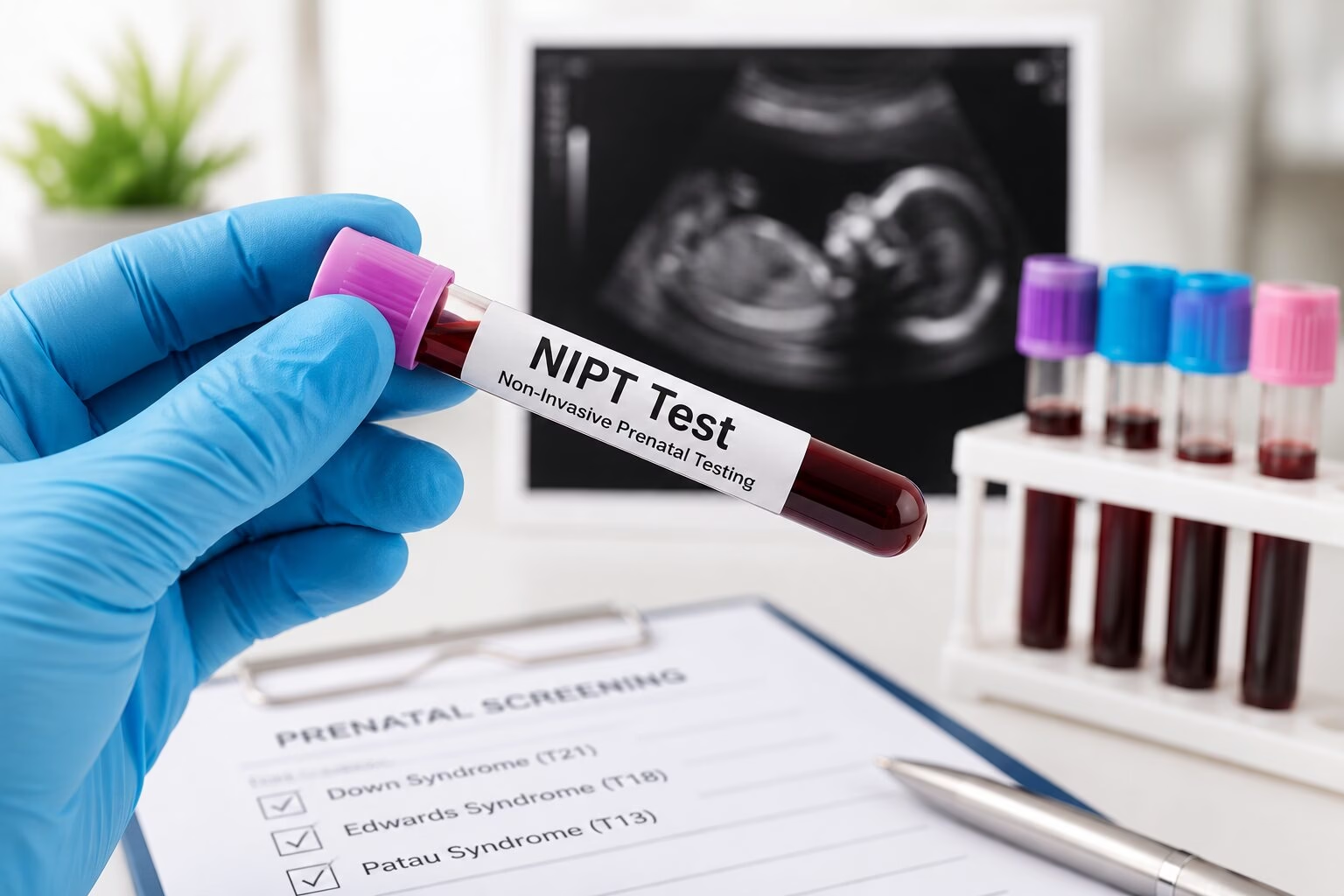
Pregnancy brings many important decisions, including whether to undergo prenatal screening. One of the tests increasingly discussed during early pregnancy is the NIPT test, or Non-Invasive Prenatal Testing. It uses a blood sample from the mother to screen for certain chromosomal conditions affecting the pregnancy.
Unlike diagnostic procedures that involve sampling from around the pregnancy, NIPT requires only a maternal blood sample. It is commonly used to screen for conditions such as Down syndrome, Edwards syndrome, and Patau syndrome. However, it is important to understand that NIPT is a screening test, not a diagnostic test. A high-risk result usually needs further medical evaluation and, when appropriate, diagnostic testing.
This guide explains what the NIPT test is, when to take it, how it works, what it can detect, its cost in Dubai, preparation, accuracy, and how to understand your results.
What Is an NIPT Test?
NIPT stands for Non-Invasive Prenatal Testing. It is a prenatal screening test performed using a blood sample from the pregnant mother.
During pregnancy, small fragments of cell-free DNA from the placenta circulate in the mother’s bloodstream. NIPT analyzes this DNA to estimate the likelihood of certain chromosomal conditions. Because the sample is collected from the mother’s blood, the test does not require a procedure involving the uterus or amniotic fluid.
NIPT commonly screens for:
- Down syndrome (Trisomy 21)
- Edwards syndrome (Trisomy 18)
- Patau syndrome (Trisomy 13)
- Certain sex chromosome abnormalities, depending on the test
- Selected additional chromosomal conditions or microdeletions in some expanded packages
The exact conditions included depend on the laboratory and NIPT package selected.
When Can You Take an NIPT Test?
NIPT is generally available from around 10 weeks of pregnancy. Some testing pathways specifically use 10 weeks as the minimum gestational age. Taking the test too early may result in an insufficient amount of fetal or placental DNA being available for analysis. Your healthcare provider can confirm whether you are at the appropriate stage of pregnancy for testing.
NIPT may be considered during early pregnancy regardless of whether you have known risk factors. Your doctor can help determine whether it is appropriate based on your pregnancy history, ultrasound findings, age, previous screening, and personal preferences.
Why Is NIPT Important During Pregnancy?
NIPT can provide more detailed screening information about certain chromosomal conditions than some traditional screening approaches. It may be particularly useful when parents want additional information about the likelihood of common chromosomal conditions without undergoing an invasive procedure.
NIPT may be considered for:
- Routine prenatal screening
- Pregnancies with increased chromosomal risk
- Abnormal or concerning ultrasound findings
- A previous pregnancy affected by a chromosomal condition
- A family or personal history that warrants additional screening
- Pregnancies following IVF, when recommended by the healthcare provider
- Parents who prefer non-invasive prenatal screening
NIPT should be discussed as part of overall prenatal care rather than viewed as a replacement for ultrasound or other recommended pregnancy assessments.
What Does NIPT Test For?
Down Syndrome
Down syndrome is associated with an additional copy of chromosome 21. NIPT is highly sensitive for screening for Trisomy 21 and is widely used for this purpose.
Edwards Syndrome
Edwards syndrome, or Trisomy 18, occurs when there is an additional copy of chromosome 18. NIPT can screen for an increased likelihood of this condition.
Patau Syndrome
Patau syndrome, or Trisomy 13, is another chromosomal condition that can be included in standard NIPT screening.
Sex Chromosome Conditions
Some NIPT packages also screen for certain differences involving the sex chromosomes. Availability depends on the test selected and local testing guidelines.
Additional Genetic Conditions
Expanded NIPT packages may include additional chromosomal abnormalities or microdeletions. However, a larger test panel does not necessarily mean that every condition is screened with the same level of accuracy. For this reason, ask your healthcare provider or testing provider exactly which conditions are included before choosing an expanded NIPT package.
How Is the NIPT Test Done?
The NIPT procedure is relatively simple because it requires only a maternal blood sample.
Step 1: Test Eligibility
The healthcare professional confirms your pregnancy details, gestational age, and relevant medical history.
Step 2: Blood Sample Collection
A small amount of blood is drawn from a vein in your arm using standard blood collection procedures.
Step 3: Laboratory Analysis
The sample is sent to a laboratory where cell-free DNA is analyzed to estimate the likelihood of selected chromosomal conditions.
Step 4: Results
The laboratory prepares a report indicating whether the screened conditions are considered low risk or high risk, or whether the result could not be reported because of insufficient or unsuitable DNA information.
The process does not involve inserting a needle into the uterus and is therefore considered non-invasive.
Does NIPT Require Any Preparation?
In most cases, NIPT requires little or no special preparation. Unlike some blood tests, fasting is generally not required. You can usually eat and drink normally unless your healthcare provider gives you different instructions.
Before your appointment, provide accurate information about:
- Your gestational age
- Whether you are carrying twins or multiples
- IVF or donor-egg pregnancy
- Previous pregnancy history
- Any relevant medical conditions
- Previous genetic or chromosomal test results
Certain situations can affect whether NIPT is suitable or how the results should be interpreted, so complete medical information is important.
NIPT Test Accuracy
NIPT is considered a highly accurate screening method for common chromosomal conditions, particularly Down syndrome. However, high accuracy does not mean 100% diagnostic certainty.
The accuracy can vary depending on:
- The specific chromosomal condition
- The testing method
- Gestational age
- Fetal fraction
- Whether the pregnancy involves twins or multiples
- The specific laboratory and test panel
A low-risk NIPT result significantly reduces the likelihood of the screened conditions but does not guarantee that the baby has no genetic, chromosomal, developmental, or other health condition. Similarly, a high-risk result does not automatically mean that the baby has the condition.
NIPT vs. Double Marker Test
Both NIPT and the Double Marker Test are prenatal screening tests, but they use different approaches and provide different levels of screening information.
The Double Marker Test is generally performed during the first trimester and uses maternal blood markers together with pregnancy information and, depending on the screening pathway, ultrasound findings to estimate the risk of certain chromosomal conditions.
NIPT analyzes cell-free DNA from a maternal blood sample and is generally more accurate for screening common trisomies such as Trisomy 21.
If you want to understand the other first-trimester screening option in more detail, read our guide to the Double Marker Test During Pregnancy.
NIPT Test Cost in Dubai
The cost of NIPT in Dubai varies depending on the laboratory, test package, number of chromosomal conditions screened, and whether additional screening options are included.
At Health 24/7, the NIPT service page currently lists testing from AED 799, while individual packages are listed at different prices depending on their scope. For example, the Essential package is listed at AED 1,199, Advanced at AED 1,899, and Full Genome at AED 2,799.
NIPT Package | Listed Price |
Starting price | From AED 799 |
Essential | AED 1,199 |
Advanced | AED 1,899 |
Full Genome | AED 2,799 |
Prices and package availability can change, so confirm the current price and exactly what is included before booking.
NIPT Test at Home in Dubai
One of the advantages of NIPT is that the test only requires a maternal blood sample. This makes home sample collection possible when the service is available.
Health 24/7 coordinates at-home NIPT sample collection in Dubai through trained, DHA-licensed healthcare professionals. The sample is collected using standard procedures and transported to an appropriate laboratory for analysis. At-home testing may be convenient for pregnant women who prefer to avoid unnecessary travel or clinic visits.
If you want to learn more about the accuracy and process of pregnancy genetic testing at home, read our guide to At-Home Pregnancy Genetic Testing.
Understanding NIPT Results
NIPT reports commonly classify results as low risk, high risk, or sometimes no result.
Low-Risk Result
A low-risk result means the screening found a low likelihood of the specific chromosomal conditions included in the test. It does not rule out every possible genetic or medical condition.
High-Risk Result
A high-risk result indicates an increased likelihood of the screened condition. It is not a definitive diagnosis. Your doctor may recommend genetic counseling and diagnostic testing, such as chorionic villus sampling (CVS) or amniocentesis, to confirm the finding when appropriate.
No-Result or Insufficient Result
Sometimes a laboratory cannot provide a result because there is not enough usable cell-free DNA or for technical reasons. A repeat test or alternative screening or diagnostic approach may be recommended depending on the circumstances.
What Happens After a High-Risk NIPT Result?
A high-risk NIPT result can understandably cause anxiety, but it is important not to assume that the pregnancy is definitely affected.
Your healthcare provider may recommend:
- Reviewing the NIPT findings.
- Comparing the result with ultrasound findings and other screening results.
- Genetic counseling.
- Diagnostic testing if appropriate.
- Further pregnancy monitoring.
NIPT is a screening test, so a positive result generally needs confirmation before major medical decisions are made.
Is NIPT Safe?
Yes. NIPT itself is a non-invasive maternal blood test and does not involve a procedure on the fetus. The main physical risks are similar to those associated with a routine blood draw, such as brief discomfort or bruising at the collection site.
The more important consideration is understanding what the test can and cannot tell you. A screening result should always be interpreted with appropriate medical guidance.
NIPT for Twin Pregnancy
NIPT can be available for some twin pregnancies, but the test’s ability to provide certain information can vary depending on the type of twin pregnancy and the laboratory’s testing method.
For example, screening may differ between identical and non-identical twins, and some expanded tests may have limitations in multiple pregnancies. If you are expecting twins or more than two babies, confirm eligibility and test limitations with your healthcare provider before booking.
NIPT After IVF
NIPT may also be considered in pregnancies achieved through IVF, including some pregnancies involving donor eggs, depending on the circumstances and the testing provider. However, IVF status alone does not determine whether NIPT is appropriate. Your obstetrician or genetic counselor can advise you based on your pregnancy and medical history.
NIPT vs. Other Prenatal Genetic Tests
NIPT should not be confused with diagnostic genetic testing.
Test | Main Purpose | Invasive? |
NIPT | Screening for selected chromosomal conditions | No |
Double Marker Test | First-trimester risk screening | No |
Ultrasound | Assess fetal development and anatomy | No |
CVS | Diagnostic chromosome/genetic testing | Yes |
Amniocentesis | Diagnostic chromosome/genetic testing | Yes |
The right combination of tests depends on your pregnancy, medical history, screening results, and healthcare provider’s recommendations.
When Should You Consider NIPT?
NIPT may be worth discussing with your healthcare provider if you want early screening for common chromosomal conditions or if your pregnancy has factors that warrant additional screening.
You may also consider discussing it if:
- You are at an increased risk of chromosomal abnormalities.
- Previous screening has shown an increased risk.
- An ultrasound has identified a concern.
- You have a previous pregnancy affected by a chromosomal condition.
- You want a non-invasive screening option.
- You are looking for additional information during early pregnancy.
The decision should be based on informed discussion rather than age or a single risk factor alone.
Where Can You Get an NIPT Test in Dubai?
When choosing an NIPT provider, consider the qualifications of the professionals collecting the sample, laboratory accreditation, test methodology, reporting process, privacy standards, and availability of medical guidance.
Health 24/7 coordinates NIPT testing in Dubai through DHA-licensed professionals and accredited diagnostic partners, with both clinic and at-home sample collection options available.
Make an Informed Choice About Prenatal Screening
NIPT can provide valuable information about the likelihood of certain chromosomal conditions through a simple maternal blood test. Its non-invasive nature and high screening performance for common trisomies make it an important option to discuss during prenatal care.
If you are considering NIPT, speak with your healthcare provider about the appropriate timing, test panel, limitations, and what may be recommended if the result is high risk.
Book Your NIPT Test at Health 24/7 Today and get professional support with appointment coordination, sample collection, and result delivery.
Frequently Asked Questions
What is an NIPT test?
NIPT is a non-invasive prenatal screening test that analyzes cell-free DNA in a pregnant woman’s blood to estimate the likelihood of certain chromosomal conditions.
How many weeks pregnant should you be for NIPT?
NIPT is generally performed from 10 weeks of pregnancy onward, although the exact eligibility requirements can vary by test and provider.
Is NIPT a diagnostic test?
No. NIPT is a screening test. A high-risk result may require diagnostic testing to confirm whether the fetus has the screened condition.
How accurate is NIPT?
NIPT has very high screening accuracy for common chromosomal conditions, particularly Down syndrome, but it is not 100% diagnostic.
Does NIPT require fasting?
Usually, no. NIPT generally requires a maternal blood sample without special fasting preparation, although you should follow any instructions provided by your healthcare provider.
How much does NIPT cost in Dubai?
Health 24/7 currently lists NIPT testing from AED 799, with different packages available depending on the conditions included.
Can NIPT tell the baby’s gender?
Some NIPT packages can report information about sex chromosomes or fetal sex, depending on the test and applicable guidelines. Ask the testing provider what is included in your selected package.
What happens if NIPT is positive?
A positive or high-risk NIPT result does not confirm that the baby has a chromosomal condition. Your doctor may recommend genetic counseling and diagnostic testing for confirmation.
Is NIPT safe for the baby?
Yes. NIPT is a maternal blood test and does not involve an invasive procedure on the fetus.