Magnetic Resonance Imaging (MRI) is one of the most advanced diagnostic imaging techniques available today, helping doctors diagnose a wide range of conditions affecting the brain, spine, joints, muscles, and internal organs. While MRI scans provide highly detailed images without using radiation, many patients feel anxious about undergoing the examination because of the enclosed design of traditional MRI machines.
For individuals with claustrophobia, anxiety, mobility challenges, or larger body sizes, an Open MRI offers a more comfortable imaging experience while still providing the detailed diagnostic information doctors need for many medical conditions.
At Health 24/7, we understand that patient comfort is just as important as diagnostic accuracy. Our MRI services are designed to provide high-quality imaging in a supportive environment, helping patients feel more relaxed throughout the examination. This guide explains everything you need to know about Open MRI scans, including how they work, who may benefit from them, and what to expect during the procedure.
What Is an Open MRI Scan?
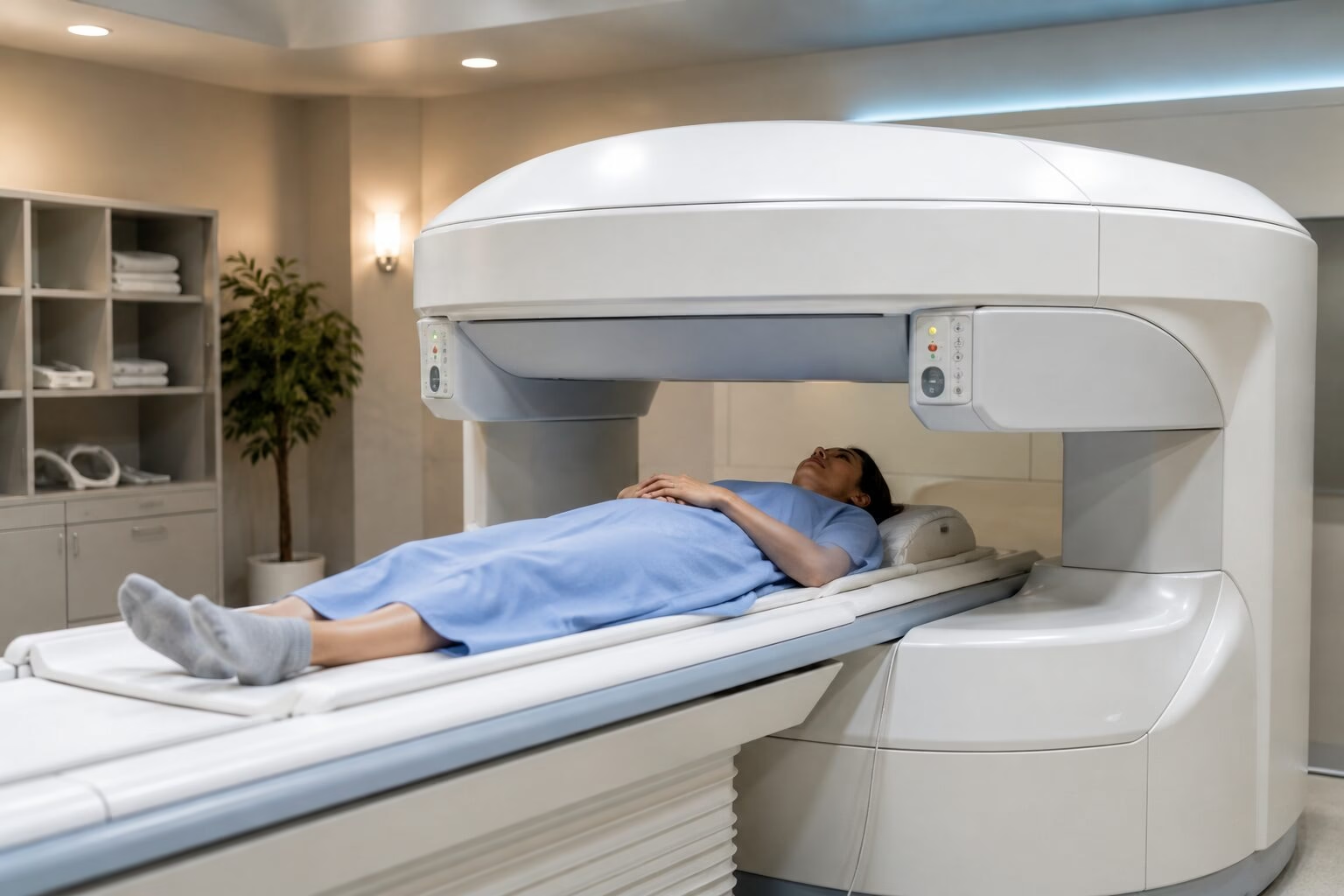
An Open MRI scan is a type of Magnetic Resonance Imaging (MRI) that uses powerful magnets and radio waves to create detailed images of the body’s internal structures. Unlike a traditional closed MRI scanner, an Open MRI features a more spacious design with open sides or a wider scanning area, making the experience more comfortable for many patients.
Like conventional MRI, Open MRI does not use ionising radiation. Instead, it produces highly detailed images of soft tissues, bones, joints, muscles, ligaments, nerves, and organs using magnetic fields and radiofrequency waves.
The open design helps reduce the feeling of being confined, making it a preferred option for patients who may find a standard MRI challenging.
Doctors may recommend an Open MRI to evaluate conditions affecting the:
- Brain
- Spine
- Neck
- Shoulders
- Knees
- Hips
- Ankles
- Joints
- Muscles
- Ligaments
- Certain abdominal and pelvic structures
How Does an Open MRI Scan Work?
Although the scanner looks different from a conventional MRI machine, the technology works in a similar way.
During the examination:
- You lie comfortably on a movable scanning table.
- The table is positioned within the open MRI system.
- Powerful magnets create a magnetic field around the area being examined.
- Radio waves temporarily interact with hydrogen atoms in your body.
- A computer processes the signals to produce detailed cross-sectional images.
Unlike X-rays or CT scans, MRI does not expose you to radiation. Instead, it creates exceptionally detailed images of soft tissues that may not be visible with other imaging techniques.
Depending on the body part being examined, the scan usually takes between 20 and 60 minutes.
Open MRI vs. Traditional MRI
Both Open MRI and traditional MRI use the same basic technology to produce detailed images of the body. However, there are important differences in patient comfort and scanner design.
|
Feature |
Open MRI |
Traditional MRI |
|
Scanner Design |
Open-sided or wider design |
Fully enclosed tunnel |
|
Patient Comfort |
Higher |
Moderate |
|
Suitable for Claustrophobic Patients |
Yes, often preferred |
May be challenging |
|
Image Quality |
Excellent for many examinations |
Excellent |
|
Scan Time |
May be slightly longer |
Usually shorter |
|
Best For |
Patients needing a more comfortable experience |
Most routine MRI examinations |
While Open MRI provides excellent diagnostic images for many conditions, certain specialised examinations may still require a high-field traditional MRI system. Your doctor or radiologist will recommend the most appropriate scanner based on your medical condition and the type of images needed.
Who Should Consider an Open MRI?
Open MRI has been developed to make MRI examinations more comfortable for patients who may struggle with traditional scanners.
Patients with Claustrophobia
One of the most common reasons patients choose an Open MRI is claustrophobia. The open design reduces the feeling of confinement, helping many patients complete the examination without significant anxiety.
Patients with Anxiety
Some individuals feel nervous or anxious about remaining inside a traditional MRI scanner for an extended period.
The spacious design of an Open MRI often creates a calmer experience, allowing patients to feel more relaxed during the scan.
Patients with Larger Body Sizes
Open MRI systems typically provide more space around the patient, making them a more comfortable option for individuals with larger body sizes or those who find enclosed scanners restrictive.
Elderly Patients
Older adults who have difficulty remaining in confined spaces or who require additional comfort during imaging may benefit from an Open MRI examination.
Children
Some children who need MRI imaging may tolerate an Open MRI better because of its less enclosed design. Depending on the child’s age and ability to remain still, sedation may still be necessary in certain cases.
Patients with Limited Mobility
Patients with chronic pain, arthritis, spinal disorders, or limited mobility often find it easier to position themselves comfortably within an Open MRI system.
What Conditions Can an Open MRI Diagnose?
An Open MRI can help diagnose many of the same conditions as a traditional MRI, particularly those involving soft tissues, joints, and the nervous system.
Common uses include:
Brain Disorders
Open MRI may be used to evaluate:
- Headaches
- Stroke
- Brain tumours
- Multiple sclerosis
- Seizure disorders
- Brain injuries
Spine Conditions
MRI provides detailed images of the cervical, thoracic, and lumbar spine.
It helps diagnose:
- Herniated discs
- Spinal stenosis
- Degenerative disc disease
- Nerve compression
- Spinal injuries
Joint Injuries
Doctors frequently request Open MRI scans to evaluate:
- Knee injuries
- Shoulder pain
- Hip disorders
- Ankle injuries
- Wrist problems
The scan clearly shows cartilage, ligaments, tendons, and surrounding soft tissues.
Sports Injuries
Athletes often undergo MRI examinations to assess:
- Ligament tears
- Muscle injuries
- Tendon damage
- Cartilage injuries
- Joint inflammation
Because MRI provides excellent soft tissue contrast, it is considered one of the best imaging techniques for sports medicine.
Arthritis and Joint Disorders
MRI helps evaluate both inflammatory and degenerative joint diseases by providing detailed images of cartilage, ligaments, bone marrow, and surrounding tissues.
Soft Tissue Abnormalities
Open MRI can also detect abnormalities involving:
- Muscles
- Tendons
- Ligaments
- Soft tissue masses
- Certain pelvic and abdominal structures when clinically indicated
By producing detailed, high-resolution images, Open MRI helps healthcare providers diagnose conditions accurately and develop personalised treatment plans.
Open MRI Procedure: What to Expect
Many patients are surprised by how straightforward an Open MRI examination is. The procedure is painless, non-invasive, and usually completed within an hour.
Step 1: Registration
When you arrive at the imaging centre, you’ll complete the registration process and review your medical history with the radiology team.
Step 2: MRI Safety Screening
Before entering the MRI room, you’ll be asked about any implanted medical devices, pacemakers, surgical clips, metal fragments, or other metallic objects that could interfere with the scan.
Step 3: Removing Metal Objects
You’ll need to remove items such as:
- Jewellery
- Watches
- Glasses
- Hearing aids
- Hairpins
- Credit cards
- Mobile phones
These items can be affected by the MRI’s powerful magnetic field.
Step 4: Positioning for the Scan
You’ll lie comfortably on the MRI table while the radiographer positions the area being examined within the scanner. Cushions or supports may be used to help you remain comfortable throughout the examination.
In the next section, we’ll explain how to prepare for an Open MRI, discuss safety considerations, compare costs in Dubai, help you understand your MRI results, and answer some of the most frequently asked questions about Open MRI scans.
How to Prepare for an Open MRI Scan
Preparing for an Open MRI is usually simple, and most examinations require very little preparation. However, the exact instructions may vary depending on the area of the body being examined and whether contrast dye is required.
Before your appointment, follow these general guidelines:
- Wear comfortable clothing without metal zippers or buttons whenever possible.
- Remove jewellery, watches, glasses, hearing aids, hairpins, and other metallic objects before entering the MRI room.
- Inform your healthcare provider if you have a pacemaker, cochlear implant, aneurysm clips, metal fragments, or any implanted medical device.
- Let the radiology team know if you are pregnant or think you may be pregnant.
- Continue taking your regular medications unless your doctor advises otherwise.
If Contrast Is Required
Some MRI examinations require a contrast agent to improve image quality and highlight certain tissues or blood vessels. If contrast is needed, your healthcare provider may recommend avoiding food for a few hours before the scan and may review your kidney function if necessary.
Following the preparation instructions provided by your imaging centre helps ensure the best possible image quality and a smooth examination.
Is an Open MRI Safe?
Yes. An Open MRI is considered a safe diagnostic imaging procedure when performed after appropriate safety screening.
Unlike X-rays and CT scans, MRI uses magnetic fields and radio waves, meaning there is no exposure to ionising radiation.
MRI is commonly used to examine:
- Brain disorders
- Spine conditions
- Joint injuries
- Sports injuries
- Soft tissue abnormalities
Before every examination, patients complete an MRI safety questionnaire to identify any implanted medical devices or metal objects that may not be compatible with MRI.
If contrast material is required, your healthcare provider will determine whether it is appropriate based on your medical history and kidney function.
Open MRI Cost in Dubai
The cost of an Open MRI scan in Dubai depends on the body part being examined, whether contrast is required, and the diagnostic centre.
Typical price ranges include:
|
MRI Examination |
Approximate Cost |
|
Brain MRI |
AED 900–1,600 |
|
Spine MRI |
AED 1,000–1,800 |
|
Joint MRI |
AED 900–1,500 |
|
Contrast MRI |
Additional charges may apply |
The final cost may vary depending on:
- The body part being scanned
- Whether contrast is required
- The complexity of the examination
- Insurance coverage
- The imaging facility
Before booking your appointment, it’s always a good idea to confirm pricing and insurance eligibility with your chosen diagnostic centre.
Understanding Your Open MRI Results
Once your scan is complete, the images are reviewed by an experienced radiologist who prepares a detailed report for your referring doctor.
The report may identify:
- Ligament injuries
- Muscle tears
- Herniated discs
- Brain abnormalities
- Joint inflammation
- Arthritis
- Soft tissue injuries
- Tumours or cysts
- Nerve compression
Your doctor will discuss the findings with you and explain whether further treatment, additional investigations, or specialist referral is required.
When Will You Receive Your Results?
Many imaging centres provide MRI reports within 24 to 48 hours, while urgent examinations may be interpreted sooner.
Where Can You Get an Open MRI Scan in Dubai?
Choosing the right imaging centre is essential for obtaining accurate results and a comfortable patient experience.
Look for a diagnostic centre that offers:
- Experienced radiologists
- Modern MRI technology
- Comfortable scanning facilities
- Fast report turnaround
- Comprehensive diagnostic imaging services
- Personalized patient care
At Health 24/7, we are committed to providing high-quality MRI services in a supportive and patient-friendly environment. Our experienced radiology team focuses on delivering accurate diagnostic imaging while ensuring every patient feels informed and comfortable throughout the examination.
Take the Next Step Toward Comfortable MRI Imaging
If you’ve been postponing an MRI because of claustrophobia, anxiety, or concerns about comfort, an Open MRI may offer a more relaxed imaging experience without compromising diagnostic value for many examinations.
At Health 24/7, our experienced radiology team is dedicated to helping patients receive the imaging they need in a comfortable and professional setting. Whether you’re being evaluated for a sports injury, joint pain, spinal condition, or another medical concern, we’ll help determine the most appropriate MRI examination for your needs.
Book your MRI consultation with Health 24/7 today and let our team guide you toward accurate diagnosis and personalized care.
Frequently Asked Questions
What is an Open MRI scan?
An Open MRI is a type of magnetic resonance imaging that uses a more spacious scanner design to create detailed images of the body’s internal structures. It is often preferred by patients who experience claustrophobia or anxiety with traditional MRI scanners.
Is an Open MRI as accurate as a traditional MRI?
For many medical conditions, Open MRI provides excellent diagnostic images. However, some specialised examinations may require a high-field traditional MRI scanner. Your doctor will recommend the most suitable option based on your clinical needs.
Is an Open MRI suitable for claustrophobic patients?
Yes. The open design provides more space around the patient, making it a popular choice for individuals who feel uncomfortable in enclosed MRI machines.
How long does an Open MRI scan take?
Most Open MRI examinations take between 20 and 60 minutes, depending on the body part being examined and whether contrast is required.
Does an Open MRI use radiation?
No. Like all MRI scans, Open MRI uses magnetic fields and radio waves rather than ionising radiation.
How much does an Open MRI cost in Dubai?
The cost generally ranges from AED 900 to AED 1,800, depending on the examination, body part, and whether contrast material is used.
Can overweight patients have an Open MRI?
Many Open MRI systems are designed to provide a more comfortable experience for patients with larger body sizes. However, weight limits vary by scanner, so it’s best to check with the imaging centre before booking.
Do I need to prepare for an Open MRI?
Most Open MRI scans require little preparation. You’ll usually be asked to remove metal objects and inform your healthcare provider about any implanted medical devices or pregnancy before the examination.