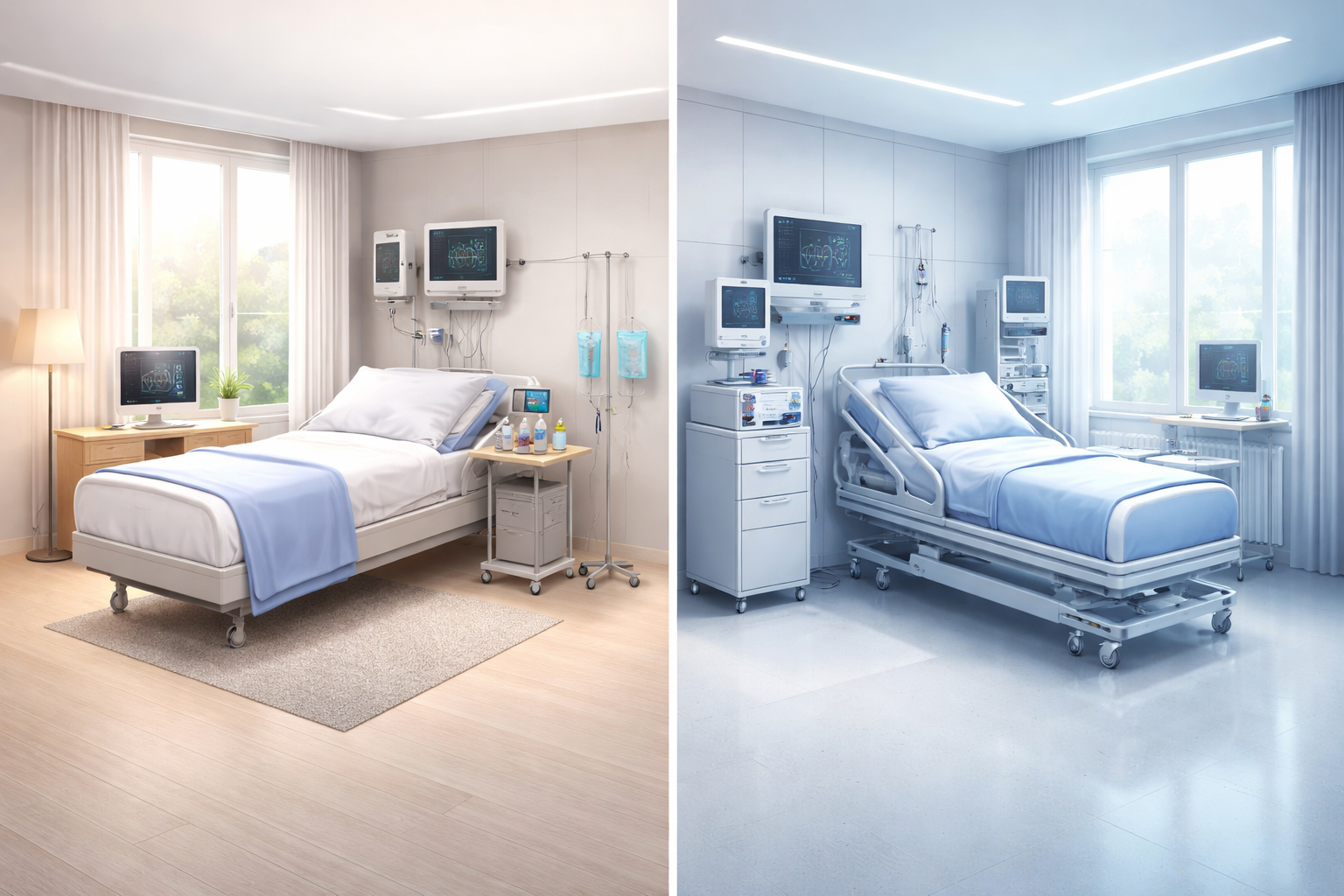
Choosing between home nursing and hospital care directly affects recovery, comfort, and total medical expenses. Both options provide professional healthcare, but the experience, cost structure, and level of attention are very different. This guide explains the real differences, cost factors, benefits, and limitations so you can make a clear decision based on actual needs. Read on to compare which option fits better for different health conditions and long term care.
What Is Home Nursing Care and Hospital Care
Home nursing care refers to professional medical support provided at a patient’s home by licensed nurses, while hospital care involves treatment inside a medical facility with continuous supervision and access to advanced equipment. Home care focuses on personalized support in a familiar environment, while hospitals provide structured care for complex and emergency conditions.
- Home nursing is delivered at the patient’s residence
- Hospital care is provided in a clinical setting
- Home care offers one-to-one attention
- Hospitals manage multiple patients at the same time
- Both are handled by trained healthcare professionals
Types of Care Available in Each Option
Home nursing services in Dubai are designed for patients who need regular monitoring and support without hospital admission.
- General nursing care for daily health monitoring
- Post surgery recovery support and wound care
- Elderly care with mobility and medication assistance
- Newborn and maternity care at home
- 24-hour or live-in nursing support
Hospitals provide structured care with access to specialized departments and advanced systems.
- Emergency and critical care units
- Surgical procedures and operating theaters
- Intensive care units for serious conditions
- Specialized treatment departments
- Continuous monitoring with advanced equipment
Cost Comparison Between Home Nursing and Hospital Care
Cost plays a major role when choosing between home nursing and hospital care, and the difference becomes clearer when you look beyond just daily rates. Home nursing is more flexible because pricing can be adjusted based on hours, level of care, and medical needs. This allows families to control expenses while still ensuring proper care. In contrast, hospital care includes infrastructure, equipment usage, specialist access, and facility charges, which increase the overall cost significantly, especially during longer stays.
Cost Comparison Table in Dubai
|
Service Type |
Home Nursing Cost (AED) |
Hospital Care Cost (AED) |
|
Hourly Care |
120 to 250 per hour |
Not applicable |
|
Daily Care |
800 to 1,500 per day |
1,000 to 2,500 (general ward) |
|
Night Care |
700 to 1,200 per night |
Included in room charges |
|
Private Room |
Not required |
2,500 to 5,000 per day |
|
ICU Care |
Not applicable |
5,000 to 10,000 per day or more |
|
Monthly Care |
18,000 to 30,000 |
Can exceed 60,000 to 150,000+ |
|
Additional Charges |
Minimal or included |
Tests, procedures, consultations |
Home nursing reduces additional expenses such as travel, repeated admissions, and extended hospital stays. It is often more cost effective for long term care, recovery, and chronic conditions. Hospital care, however, becomes necessary when the patient requires intensive monitoring, emergency support, or advanced medical intervention.
Hidden Costs and Long Term Value
Many people compare only the daily cost of care, but the actual financial impact becomes clear over time. Home nursing usually follows a predictable pricing structure based on hours or packages, which makes it easier to plan expenses. It also reduces indirect costs such as transportation, repeated hospital visits, and extended stays.
Hospital care often includes additional charges that are not always visible at the start. Diagnostic tests, specialist consultations, medications, and room upgrades can quickly increase the total cost. Over time, especially for long term recovery, hospital expenses can become significantly higher compared to home based care.
Comfort and Emotional Well Being
Recovery is influenced not only by treatment but also by the surrounding environment. Home nursing allows patients to stay in a familiar setting, which improves emotional stability and reduces stress. Being close to family members provides constant support, while familiar surroundings help reduce anxiety. Daily routines remain more natural, and better rest contributes to faster recovery. In contrast, hospital environments are designed for medical efficiency but may feel restrictive and less comfortable during longer stays.
Level of Personal Attention
Home nursing provides dedicated one to one care, ensuring that the patient receives full attention at all times. The nurse can closely monitor changes in health, respond quickly, and adjust care based on individual needs. This improves recovery tracking and overall experience.
In hospitals, medical staff manage multiple patients simultaneously. While access to specialists and advanced care is available, individual attention may be divided unless the patient is in a critical unit. This makes home nursing more suitable for patients who require consistent monitoring but not intensive care.
Flexibility of Care and Daily Routine
Home nursing allows flexibility that is difficult to achieve in hospital settings. Care plans can be adjusted according to the patient’s comfort, lifestyle, and recovery progress.
- Nursing hours can be scheduled based on convenience
- Care routines can be personalized for each patient
- Daily activities can be adjusted freely
- Family involvement can be increased
Hospital care follows fixed schedules and protocols, which are important for medical management but may limit comfort.
Medical Safety and Supervision
Hospitals provide a controlled medical environment with access to advanced equipment and emergency response systems. This makes them essential for patients who require constant supervision or immediate intervention.
- Continuous monitoring through medical devices
- Immediate access to doctors and emergency care
- Availability of specialized treatment units
- Structured medical protocols
Home nursing is safe for stable patients who do not require intensive monitoring but still need professional medical support.
Infection Risk and Hygiene Control
The risk of infection is an important factor when choosing a care option. Home nursing reduces exposure because the patient stays in a controlled environment with limited external contact. This is especially beneficial for elderly patients and those with low immunity.
Hospitals maintain strict hygiene standards, but the presence of multiple patients increases the chances of exposure. For long term recovery, home care can provide a safer and more controlled setting.
When Home Nursing Is the Better Choice
Home nursing is ideal for patients who are stable but need regular medical support and monitoring.
- Elderly patients requiring daily assistance
- Post surgery patients recovering at home
- Individuals with chronic health conditions
- Mothers and newborns needing care
- Patients requiring injections or IV therapy
If you’re considering this option, read our Complete Guide to Home Nursing Services in Dubai: Types, Costs & How to Choose the Right Care to make an informed decision.
When Hospital Care Is Necessary
Hospital care is essential when the condition requires advanced medical intervention and continuous supervision.
- Emergency medical situations
- Severe or life threatening conditions
- Major surgeries and procedures
- Intensive care and monitoring
- Complex diagnostic requirements
How to Decide the Right Option
Choosing the right option depends on the patient’s medical condition, budget, and the level of care required. It is important to first assess how serious the condition is and whether it needs hospital level supervision or can be managed safely at home. Consulting a doctor helps in making a medically sound decision. You should also compare the total cost instead of just daily rates, while considering the patient’s comfort, emotional support, and availability of proper care at home.
Choosing Care That Matches the Patient’s Needs
Home nursing and hospital care serve different purposes in healthcare. Home nursing offers comfort, personalized attention, and cost efficiency for stable patients, while hospital care provides advanced treatment and emergency support for critical conditions. Understanding the differences in cost, care level, and recovery experience helps families make informed decisions that support both health and financial stability.
Safe and Affordable Home Nursing Services in Dubai
Health24/7 provides advanced home nursing services in Dubai by connecting you with trusted centers and experienced nurses for safe and accurate medical care. Patients can access professional support for elderly care, post-surgery recovery, and daily health monitoring at home. With experienced healthcare professionals, affordable pricing, and reliable service, families can ensure consistent care in a comfortable and secure environment.