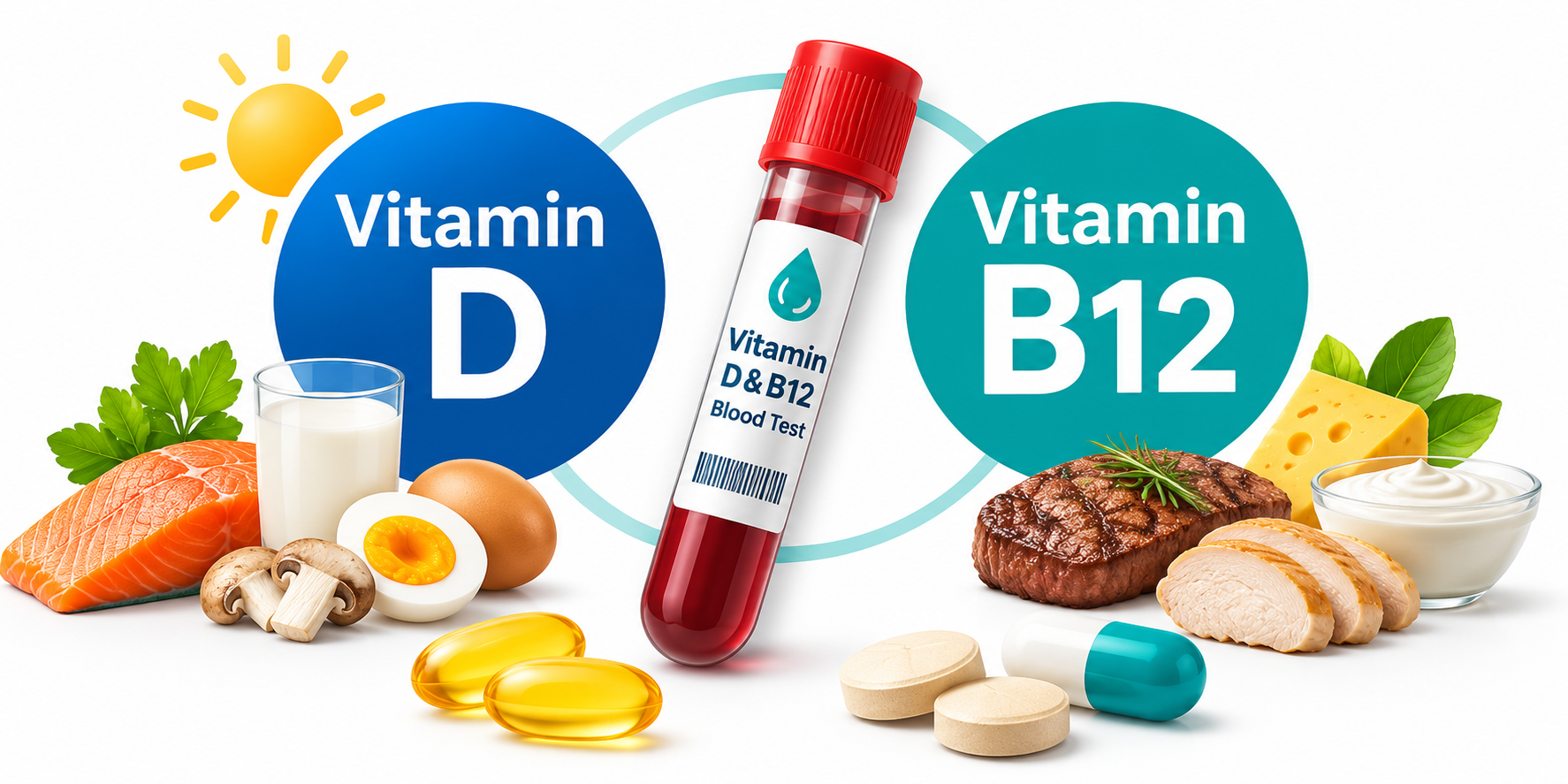
Vitamin D and vitamin B12 are two essential nutrients that support different functions in the body. Vitamin D helps maintain healthy bones, supports calcium absorption and contributes to muscle function. Vitamin B12 is necessary for red blood cell production, DNA formation and normal nerve function. Low levels of either vitamin can affect daily health, although their symptoms and possible complications differ.
People experiencing persistent tiredness, muscle weakness, bone discomfort, numbness or tingling sometimes require blood tests to investigate possible deficiencies. A Vitamin D and B12 blood test measures the levels of these nutrients and helps healthcare professionals determine whether further evaluation or treatment is necessary.
Looking for a Vitamin D and B12 test in Dubai? This guide covers deficiency symptoms, normal blood levels, individual testing costs, preparation requirements and convenient at-home sample collection.
What Are Vitamin D and B12 Blood Tests?
Vitamin D and vitamin B12 blood tests are laboratory investigations that measure the concentration of these nutrients in your blood. Although both are commonly requested when investigating nutritional deficiencies, each test evaluates a different aspect of health.
A Vitamin D blood test generally measures 25-hydroxyvitamin D, also written as 25(OH)D. This is the main circulating form used to assess vitamin D status.
A Vitamin B12 blood test measures the amount of circulating cobalamin in the blood. It helps identify low vitamin B12 levels that can affect red blood cell production and nervous system function.
Healthcare professionals may request these tests separately or together, depending on symptoms, medical history and nutritional risk factors.
The two tests provide different information:
- Vitamin D testing evaluates nutrient status and investigates possible bone and muscle health concerns.
- Vitamin B12 testing assesses circulating levels and investigates certain anaemia and neurological symptoms.
- Combined testing measures both nutrients using samples collected during the same appointment.
Having both tests performed does not automatically identify every possible cause of fatigue or weakness. Other investigations may be necessary depending on the clinical findings.
Why Are Vitamin D and B12 Tests Requested?
Vitamin D and B12 testing is generally requested when symptoms, dietary habits or medical conditions raise concerns about possible deficiencies. Although their symptoms sometimes overlap, these deficiencies affect different biological processes and require separate laboratory measurements.
Common reasons for requesting these tests include:
- Persistent tiredness without an obvious explanation or identifiable cause.
- Muscle weakness or discomfort affecting everyday physical activities.
- Bone pain or concerns about reduced bone strength.
- Numbness or tingling sensations affecting hands and feet.
- Balance or coordination difficulties requiring further medical evaluation.
- Certain types of anaemia identified through previous blood investigations.
- Restricted dietary intake or possible nutritional deficiencies.
- Digestive conditions affecting normal nutrient absorption and availability.
A healthcare professional may recommend testing one or both vitamins depending on the symptoms. For example, someone experiencing bone discomfort and muscle weakness may require vitamin D assessment, while unexplained anaemia or neurological symptoms can warrant vitamin B12 testing.
It is important not to assume that these symptoms automatically indicate a vitamin deficiency. Thyroid conditions, iron deficiency, diabetes, sleep problems and other medical conditions can produce similar complaints.
Vitamin D Deficiency Symptoms
Vitamin D contributes to calcium and phosphorus regulation, bone mineralisation and normal muscle function. When vitamin D levels become significantly low, problems involving bones and muscles can develop. Symptoms vary depending on the severity and duration of the deficiency.
Persistent Tiredness
Some people with low vitamin D levels report ongoing tiredness and reduced energy. However, fatigue is a nonspecific symptom and does not establish vitamin D deficiency independently. A blood test helps determine whether vitamin D levels fall below the laboratory’s reference range.
Bone Pain and Discomfort
Vitamin D supports calcium absorption, which is necessary for maintaining healthy bones. Significant deficiency can interfere with normal bone mineralisation and contribute to generalised bone discomfort. Severe, prolonged deficiency can also lead to osteomalacia in adults.
Muscle Weakness
Low vitamin D levels can be associated with muscle weakness, particularly around the hips and thighs. Some people experience difficulty climbing stairs, standing from seated positions or performing everyday physical activities. These symptoms require assessment alongside other clinical findings.
Muscle Aches and Discomfort
Muscle aches and generalised discomfort can occur alongside vitamin D deficiency. However, these symptoms are not specific to vitamin D and can result from several medical conditions. Appropriate blood testing helps investigate deficiency when symptoms or risk factors support further evaluation.
Increased Risk of Bone Problems
Prolonged and severe vitamin D deficiency can contribute to osteomalacia in adults. This condition involves inadequate bone mineralisation and can cause bone pain and muscle weakness. Identifying significant deficiency helps healthcare professionals determine appropriate treatment and monitoring.
Vitamin B12 Deficiency Symptoms
Vitamin B12 is essential for maintaining healthy nerve cells, producing DNA and supporting red blood cell formation. A deficiency can affect both the blood and nervous system. Unlike some nutritional deficiencies, low B12 can produce neurological changes alongside physical symptoms.
Unexplained Fatigue and Weakness
Vitamin B12 deficiency can interfere with normal red blood cell production. This can lead to megaloblastic anaemia, where red blood cells become abnormally large and function inefficiently. People affected by this condition can experience tiredness, weakness and reduced energy.
Numbness and Tingling
One important symptom associated with vitamin B12 deficiency is numbness or pins-and-needles sensations. These commonly affect the hands and feet. Vitamin B12 supports normal nerve function, and prolonged deficiency can damage the nervous system.
Balance and Coordination Problems
Some people with significant B12 deficiency experience difficulty maintaining balance or coordinating movements. These symptoms can develop when deficiency affects the nervous system. Persistent balance problems require medical assessment because several neurological conditions can produce similar symptoms.
Memory and Concentration Difficulties
Vitamin B12 deficiency can sometimes cause cognitive changes, including difficulty concentrating, memory problems and confusion. These symptoms can accompany other neurological signs. They should not automatically be attributed to low B12 without appropriate clinical assessment and laboratory investigations.
Sore Tongue and Mouth Changes
A smooth, red or sore tongue can occur with vitamin B12 deficiency. Some individuals also experience mouth ulcers, reduced appetite or digestive symptoms. These changes are not exclusive to B12 deficiency, making appropriate investigation important.
Vision and Neurological Changes
In more serious cases, vitamin B12 deficiency can affect the nervous system and contribute to visual problems, muscle weakness and changes in sensation. Early evaluation is important because prolonged neurological damage can sometimes become irreversible.
If you experience persistent numbness, weakness, balance difficulties or unexplained changes in vision, seek medical assessment rather than relying on a vitamin test alone.
Vitamin D and B12 Normal Levels
One of the main reasons people request these blood tests is to determine whether their results fall within expected ranges. Vitamin D and B12 have different measurement units and interpretation criteria, so their results must be assessed separately.
Vitamin D Normal Range
The standard test used to assess vitamin D status measures 25-hydroxyvitamin D in the blood. Results are commonly reported in nanograms per millilitre (ng/mL) or nanomoles per litre (nmol/L).
The following values reflect guidance from the US National Institutes of Health based on the National Academies’ assessment.
Vitamin D level | General interpretation |
Below 12 ng/mL | Deficiency risk |
12 to below 20 ng/mL | Potentially inadequate |
20 ng/mL or above | Adequate for most people |
Above 50 ng/mL | Potential risk of adverse effects |
These values are general guidance rather than universal treatment targets. Different clinical organisations use different criteria, and the appropriate level for an individual depends on their health circumstances.
For example, a result of 15 ng/mL falls within the potentially inadequate range described above. A healthcare professional considers the result alongside symptoms, medical history and other relevant findings.
Vitamin B12 Normal Range
Vitamin B12 results are commonly reported in picograms per millilitre (pg/mL) or picomoles per litre (pmol/L). There is no single reference interval used by every laboratory, so the reporting laboratory’s range remains important.
The following values provide general clinical reference points.
Vitamin B12 level | General interpretation |
Below 200 pg/mL | Low level; deficiency is a concern |
200 to 300 pg/mL | Borderline range |
Above 300 pg/mL | Generally considered within the normal range |
These are broad clinical reference points, not a replacement for the laboratory’s own reference interval.
A borderline result does not automatically confirm or exclude deficiency. When symptoms suggest B12 deficiency despite an inconclusive result, a healthcare professional may recommend additional investigations, such as methylmalonic acid (MMA).
Can Vitamin D and B12 Both Be Low?
Yes. A person can have low levels of both nutrients simultaneously. This can occur when dietary intake is inadequate, nutrient absorption is impaired or certain medical conditions affect nutritional status.
People following restricted diets can have an increased risk of vitamin B12 deficiency when they do not consume adequate fortified foods or appropriate supplements. Certain gastrointestinal conditions and previous digestive surgeries can also affect nutrient absorption.
When both tests are requested, the results help healthcare professionals assess each deficiency separately and decide whether additional investigations are necessary.
Vitamin D and B12 Test Cost in Dubai
Vitamin test prices in Dubai generally range from around AED 49 to AED 100 for individual vitamin tests, such as Vitamin D or Vitamin B12. Combined vitamin and mineral panels typically cost between AED 199 and AED 399 or more, depending on the number of tests included and the selected laboratory. The final price depends on the specific tests and sample collection arrangements.
What Affects the Test Price?
The cost of Vitamin D and B12 testing in Dubai mainly depends on the selected tests and collection service.
- Vitamin D test: Generally AED 49–100 for individual testing.
- Vitamin B12 test: Generally AED 49–100 for individual testing.
- Combined vitamin panels: Typically AED 199–399 or more.
- Number of tests: Packages containing more vitamins and minerals cost more.
- Home sample collection: Additional collection charges can increase the total price.
- Laboratory: Pricing varies between diagnostic laboratories and healthcare providers.
- Additional investigations: Tests such as CBC, folate or MMA increase the overall cost.
Can You Get a Vitamin D and B12 Test at Home in Dubai?
Yes. You can arrange Vitamin D and B12 blood sample collection at home in Dubai through healthcare services that coordinate home laboratory testing. This option is useful for people who prefer not to visit diagnostic centres or experience difficulty travelling for routine blood collection.
With home sample collection, a trained healthcare professional visits your selected location and collects the required blood sample. The sample is then transported to the designated laboratory for analysis.
Health 24/7 offers home blood testing arrangements in Dubai through approved diagnostic laboratories, including vitamin testing services.
How Does At-Home Vitamin Testing Work?
The home collection process involves appointment coordination, sample collection and laboratory analysis. The following steps explain how to arrange your Vitamin D and B12 blood tests without visiting a diagnostic centre.
- Contact Health 24/7 and specify your required vitamin blood tests.
- Share your preferred collection location and suitable appointment time.
- Confirm fasting instructions and other laboratory preparation requirements beforehand.
- A trained professional visits your home for sample collection.
- The collected blood sample reaches the designated diagnostic laboratory.
- Laboratory professionals perform the requested Vitamin D and B12 measurements.
- Your report becomes available after completing the laboratory analysis.
- Discuss abnormal findings with your healthcare professional for further guidance.
Who Can Benefit From Home Collection?
Home collection provides a convenient alternative for people who prefer receiving blood testing services at their chosen location. It can also help individuals arrange follow-up investigations without making separate visits to diagnostic centres.
- Working professionals with limited time for clinic appointments.
- Older adults who prefer convenient blood collection at home.
- People experiencing mobility difficulties or transportation challenges.
- Individuals requiring follow-up blood investigations after previous treatment.
- Families arranging multiple blood tests during one appointment.
- People who prefer private and convenient sample collection arrangements.
- Individuals seeking routine laboratory testing without travelling to clinics.
The service provides an alternative collection arrangement without changing the laboratory measurements requested by your healthcare professional.
How Is a Vitamin D and B12 Blood Test Performed?
Both tests are usually performed using a blood sample collected from a vein in the arm. Although the laboratory analyses the two nutrients separately, they can generally be requested during the same blood collection appointment.
Test Selection
The healthcare professional determines whether Vitamin D, Vitamin B12 or both tests are appropriate. Your symptoms, dietary history, medical conditions and previous results help guide this decision and identify whether additional investigations are necessary.
Preparation Before Collection
The laboratory provides instructions based on the selected tests. You should disclose any vitamin supplements, injections or prescribed medications you currently use because these details can help healthcare professionals interpret your results accurately.
Blood Sample Collection
A trained professional cleans the collection site and inserts a sterile needle into a vein, usually in the arm. The required amount of blood is collected into appropriate sample tubes for laboratory testing.
Laboratory Analysis
The collected sample undergoes separate laboratory measurements using appropriate analytical methods. Vitamin D testing measures 25-hydroxyvitamin D, while the B12 investigation measures circulating vitamin B12 concentrations in the submitted blood sample.
Report Preparation
The laboratory records the measured concentrations and provides corresponding reference intervals. A healthcare professional reviews the findings alongside your symptoms, medical history and other investigation results before recommending further assessment.
How to Prepare for Vitamin D and B12 Testing
Preparation requirements depend on the tests included in your appointment. For standalone Vitamin D and B12 measurements, fasting is generally unnecessary, although additional investigations can have different preparation requirements.
Before your appointment:
- Inform the healthcare professional about your current medications.
- Mention vitamin D and B12 supplements you regularly consume.
- Disclose recent vitamin injections and high-dose supplement use.
- Share previous abnormal vitamin test results when available.
- Confirm fasting requirements for additional blood tests beforehand.
- Follow the laboratory’s specific sample collection instructions carefully.
- Do not stop prescribed medications without appropriate medical advice.
Recent supplementation can influence vitamin measurements. Providing accurate information about your supplement intake helps healthcare professionals interpret results appropriately.
If you are taking high-dose vitamin D or B12, tell the healthcare professional before testing. Do not independently discontinue prescribed supplements simply to obtain a lower reading.
What Happens If Your Vitamin D or B12 Levels Are Low?
Treatment depends on the vitamin involved, deficiency severity and underlying cause. A healthcare professional evaluates the laboratory findings and considers whether additional investigations are necessary before recommending an appropriate treatment plan.
Managing Low Vitamin D Levels
If vitamin D deficiency is confirmed, treatment focuses on restoring appropriate levels and addressing contributing factors. The healthcare professional determines the required supplementation and follow-up according to individual clinical findings.
- Prescribed vitamin D supplementation at an appropriate dosage.
- Reviewing dietary intake of vitamin D-rich foods.
- Receiving appropriate advice about safe sunlight exposure.
- Investigating medical conditions affecting nutrient absorption.
- Assessing calcium levels when clinically indicated.
- Repeating vitamin D measurements when medically recommended.
- Reviewing supplement dosage to prevent excessive vitamin intake.
Taking excessive vitamin D without medical supervision can cause high calcium levels and other complications.
Managing Low Vitamin B12 Levels
Treatment for vitamin B12 deficiency depends on its underlying cause and whether nutrient absorption is affected. People with significant absorption problems or neurological symptoms can require a different treatment approach from individuals with inadequate dietary intake.
- Oral vitamin B12 supplementation when clinically appropriate.
- Vitamin B12 injections for selected deficiency-related conditions.
- Dietary changes to improve vitamin B12 intake.
- Investigating gastrointestinal conditions affecting nutrient absorption.
- Assessing possible pernicious anaemia when clinically indicated.
- Monitoring blood results following prescribed treatment.
- Evaluating neurological symptoms during clinical follow-up.
Treatment should not be delayed when neurological symptoms suggest significant B12 deficiency.
How Often Should You Check Vitamin D and B12 Levels?
There is no fixed testing schedule that applies to everyone. The frequency depends on original results, symptoms, underlying conditions, treatment plans and individual risks of recurring deficiency.
A healthcare professional may recommend repeat Vitamin D testing after supplementation to assess the response. Similarly, people receiving B12 deficiency treatment may require follow-up according to their symptoms, treatment method and initial findings.
Routine repeated testing is not automatically necessary for healthy individuals without relevant symptoms or risk factors. Follow-up measurements should be scheduled according to clinical needs rather than a fixed monthly or annual timetable.
Vitamin D Test vs Vitamin B12 Test: What Is the Difference?
Although both tests investigate nutritional deficiencies, they assess different nutrients and health functions. Understanding their differences helps explain why healthcare professionals sometimes request both measurements when evaluating overlapping symptoms.
Comparison | Vitamin D Test | Vitamin B12 Test |
Main purpose | Assess vitamin D status | Assess vitamin B12 status |
Test marker | 25-hydroxyvitamin D | Serum or plasma B12 |
Main functions | Bone health and calcium absorption | Nerve function and red blood cell production |
Common deficiency concerns | Bone discomfort and muscle weakness | Anaemia, numbness and tingling |
Common units | ng/mL or nmol/L | pg/mL or pmol/L |
Additional testing | Calcium or related investigations when indicated | Folate, MMA or blood count when indicated |
A healthcare professional selects the appropriate test according to symptoms and medical history. When both deficiencies are suspected, ordering both measurements during one appointment provides a broader assessment of these two nutrients.
Where Can You Get a Vitamin D and B12 Test in Dubai?
Vitamin D and B12 testing is available through diagnostic laboratories and healthcare providers across Dubai. When selecting a testing service, consider laboratory quality, collection arrangements, pricing transparency and report delivery timelines.
- Availability of individual Vitamin D and B12 measurements.
- Access to combined testing options and package information.
- Laboratory accreditation and established quality standards.
- Qualified professionals performing blood sample collection.
- Convenient home collection arrangements across Dubai.
- Clear pricing for individual and combined testing.
- Expected report turnaround time for selected investigations.
- Secure delivery of completed laboratory reports.
Health 24/7 coordinates vitamin testing through DHA-approved laboratories and offers convenient blood sample collection arrangements in Dubai.
For a broader overview of vitamin testing, preparation, procedures and reporting, read our complete vitamin test guide.
You can also explore our Vitamin Test in Dubai service to enquire about individual measurements and home sample collection.
Book Your Vitamin D & B12 Test at Health 24/7 Today
If you are experiencing unexplained fatigue, muscle weakness, bone discomfort or neurological symptoms, appropriate blood testing can help investigate possible nutritional deficiencies.
Health 24/7 provides convenient vitamin testing arrangements in Dubai, with home sample collection options and laboratory reporting. Contact the team to confirm the required tests, current pricing and preferred appointment time.
Frequently Asked Questions
How much does a Vitamin D and B12 test cost in Dubai?
The cost depends on whether you book the tests separately or choose a combined package. Health 24/7 advertises vitamin testing starting from AED 50, with individual Vitamin D testing listed from AED 49. Contact the team to confirm the current B12 test price and total cost for both measurements.
Can I test Vitamin D and B12 together?
Yes. Both measurements can generally be requested during the same blood collection appointment. The laboratory performs separate analyses for Vitamin D and B12 using the collected sample, allowing healthcare professionals to assess both nutrient levels together.
What is the normal Vitamin D level?
According to the National Academies’ assessment cited by the NIH, a 25-hydroxyvitamin D level of 20 ng/mL or above is adequate for most people. Levels below 12 ng/mL indicate deficiency risk. Individual interpretation should consider clinical circumstances and laboratory reference ranges.
What is the normal Vitamin B12 level?
Many laboratories consider serum B12 levels below approximately 200 to 250 pg/mL to be below their reference limits. Results between 200 and 300 pg/mL are commonly treated as borderline in general clinical guidance. Always refer to the reporting laboratory’s reference interval.
Do I need to fast before a Vitamin D and B12 blood test?
Fasting is generally not required for standalone Vitamin D and B12 measurements. However, additional tests included in your appointment can have different preparation requirements. Follow the laboratory’s instructions and disclose any supplements you regularly take.
Can low Vitamin D cause tiredness?
Fatigue can occur alongside low vitamin D levels, but it has many possible causes. A blood test helps assess vitamin D status when deficiency is suspected. Your healthcare professional can recommend additional investigations when other conditions need consideration.
Can low B12 cause numbness in the hands and feet?
Yes. Vitamin B12 deficiency can affect normal nerve function and cause numbness or pins-and-needles sensations, particularly in the hands and feet. Persistent neurological symptoms require medical evaluation because prolonged deficiency can sometimes cause lasting nerve damage.
Can Vitamin D and B12 be low at the same time?
Yes. Both deficiencies can occur together, particularly in people with restricted diets, nutritional problems or conditions affecting nutrient absorption. Separate blood measurements are needed to assess each vitamin and determine whether treatment is necessary.
Can I get a Vitamin D and B12 blood test at home in Dubai?
Yes. Health 24/7 coordinates home sample collection for selected blood tests in Dubai. You can contact the team to confirm arrangements for Vitamin D and B12 testing at your preferred location and appointment time.
How long does it take to receive Vitamin D and B12 test results?
Health 24/7 advertises vitamin test reports within approximately 12–24 hours. Actual turnaround depends on the selected tests and laboratory processing. Confirm the expected reporting time when arranging your sample collection appointment.
Should I take supplements before checking my vitamin levels?
Tell your healthcare professional about all supplements you take, including recent high-dose vitamin preparations and injections. They can advise whether any specific preparation instructions are necessary before testing. Never discontinue prescribed supplements without medical advice.
Can normal Vitamin B12 results rule out deficiency completely?
Not always. Some people have symptoms despite results that appear within a laboratory’s reference range. When clinical suspicion remains, additional investigations such as methylmalonic acid testing may be appropriate to assess possible deficiency more accurately.
How often should I repeat Vitamin D and B12 testing?
Repeat testing depends on the original results, treatment and individual medical circumstances. Your healthcare professional will determine whether and when follow-up measurements are necessary. Routine testing at fixed intervals is not required for everyone.